
The lump sum vs. DCA decision is rarely as clear-cut as it looks on paper. Photo by James Wheeler on Pexels.
Reading time: 7 minutes
Quick answer:
If your goal is to maximise long-run wealth, the data favours investing a lump sum immediately—lump sum outperforms dollar-cost averaging (DCA) roughly 68% of the time historically (Vanguard, 2023). But the right answer also depends on your risk tolerance, your windfall size relative to your portfolio, and how close you are to your FIRE (Financial Independence, Retire Early) date. This article walks through all of it.
What you'll get from this article
✔ Why lump sum outperforms DCA in the majority of historical periods
✔ The concept of opportunity cost and why it's the real risk often overlooked
✔ Why the market always looks dangerous to enter—and what that means for your decision
✔ The scenario where DCA has genuine analytical merit, not just psychological comfort
✔ A framework for deciding based on your portfolio size, risk tolerance, and FIRE timeline
✔ How bonds enter the conversation for investors close to their Financial Independence number
When the Answer Is Simple But the Decision Isn't: DCA vs. Lump Sum
Many investors understand the importance of implementing a passive investing strategy in their pursuit of Financial Independence or FIRE (Financial Investing, Retire Early). They invest in a low-cost, diversified index fund (or an ETF that tracks them) and contribute consistently a part of their income on a monthly basis.
But when a lump sum arrives—either an inheritance, a bonus, an asset sale, or something else—the clear thinking that guides their monthly contributions no longer applies—and they often find themselves stuck, not quite knowing how to proceed.
It's a question I've navigated personally across different types of windfalls—and one I've helped others think through too, sometimes arriving at a very different answer for them than I would for myself. The question of whether to invest it all at once, spread it out over several months, or wait for a better moment is one that confuses even experienced investors.
This article is about that exact decision. We'll walk through what the evidence actually says—including a widely cited Vanguard research—alongside the equally important behavioural case, the role of your risk tolerance, and how the calculus shifts depending on where you are on the path to Financial Independence.
We’ll also assess where and how bonds enter into this conversation, particularly for those close to reaching their retirement date. The goal isn't just to hand you the theoretically optimal answer—it's a framework that holds up when the market is making you nervous and the money is substantial.
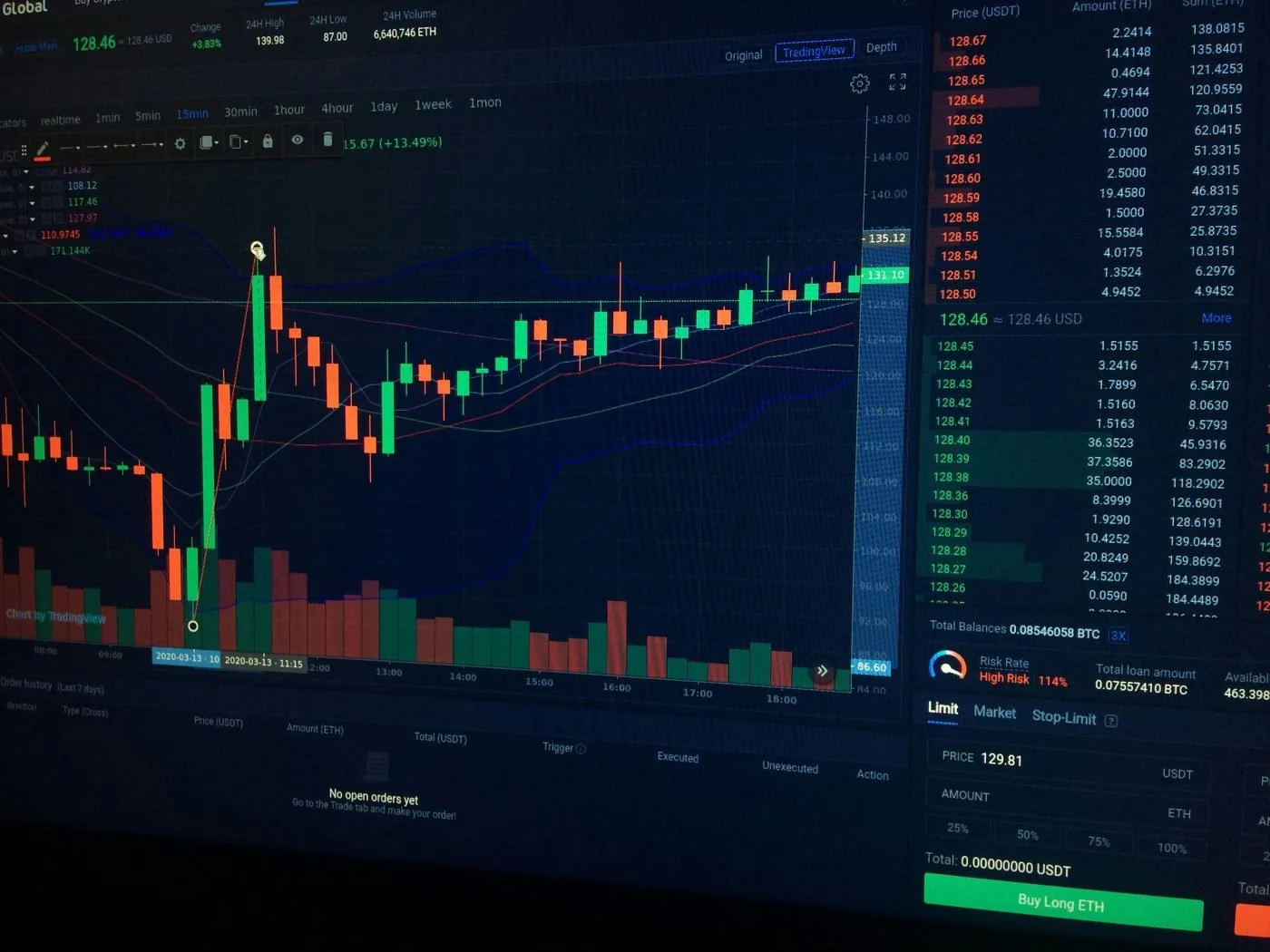
There is always some reason making the market uninviting to enter. Photo by Vladislav Maslow on Unsplash.
Why a Lump Sum Feels Different — And Why That Feeling Matters
A lot of personal finance content out there focuses on teaching you to invest on a monthly basis automatically. The point it to avoid thinking too much about it and to avoid trying to time the market. Dollar-cost averaging (DCA) is the conventional strategy underlying most FI journeys—the idea of investing a fixed amount of money each month from your salary regardless of market volatility.
But what should we do when a meaningful lump sum of capital arrives in your account all at once, and you have a genuine choice about how to deploy it? Should you dump it all in at once?
The source of these windfalls are more varied that we tend to think: year-end bonuses, severance packages, stock option vesting events, annual tax refunds that are larger than expected, proceeds from selling an asset like a car or a business, divorce settlements, crypto liquidation, gifts from family, insurance payouts, property sales, or inheritances.
What they all have in common is that they arrive outside your normal rhythm, often without warning, and sometimes with a different kind of emotional weight. This is especially the case if the amount of capital is large relative to your net worth. This is where people start getting nervous and asking questions.
A $10,000 bonus arriving into a $300,000 portfolio feels fairly straightforward and the decision about what to do with it wouldn’t keep most investors up at night. Most would probably invest it in the stock market as soon as possible—it represents after all roughly 3% of your invested assets. You’ve experienced 3% swings in the stock market on a weekly basis before, perhaps even in a single day, so you don’t think about it twice and buy more shares.
But if you’re looking at a $100,000 inheritance arriving in a $150,000 portfolio the psychology of the decision can changes for many. After all, the amount represents two thirds of your invested capital and you feel that you may experience a very different outcome depending on how you allocate the funds. Should you invest it all now or wait?
The investor is not being irrational for feeling that. The mathematical reality is that a larger relative windfall makes short-term timing more consequential—even though nothing about why you're investing, or what you're investing in, has changed. The question is whether that difference in feeling should change your behaviour, and, if so, by how much.
For someone pursuing Financial Independence, the stakes around this decision carry an additional layer. A significant windfall can represent months or even years of a timeline towards your FI number. That makes the downside scenario—investing the whole amount on Monday and watching it drop 20% over the following month or two—feel much more personal than an equivalent loss from steady monthly contributions.
It also means that getting the timing roughly right—or at least not badly wrong—feels genuinely consequential in a way that makes the decision worth thinking through carefully.
We'll work through all of it here, starting with the concept of opportunity cost—the cost of doing nothing—which sits at the centre of this debate and rarely gets enough attention.
The Real Enemy Isn't Volatility — It's the Cash That Never Makes It Into the Market
Before getting into what the data says about lump sum versus DCA, we need to briefly cover the concept of opportunity cost and why it matters here. Every day that capital sits in a savings account rather than in a globally diversified index fund (or an ETF that tracks it) is a day that money isn’t compounding at the expected long-run rate of return.
If you keep $100,000 in cash for 12 months while “waiting for the right moment” to enter, and global equities returned 10% during that time, you’ve paid an implicit cost of about $10,000 of wealth you didn’t build.
But opportunity cost is not visible, which is why it's easy to ignore. Nobody feels the pain of the return they didn’t earn in the same way as the pain of a 10% drawdown on invested assets. However, over the course of an entire FI journey measured in decades, the compounded opportunity cost of repeated hesitations like this one can rival the losses from strong market corrections you were trying to avoid in the first place.
The Evidence-Based Answer — Clear on Paper, Harder in Practice
The evidence on this is pretty clear. The most cited study comes from Vanguard’s researchteam, using MSCI World Index returns across global markets from 1976 to 2022. Lump-sum investing outperformed dollar-cost averaging (DCA) about 68% of the time, measured over a one-year horizon. This finding held across every market tested in the study—including the US, UK, Canada, Australia, and Europe—suggesting it's not a US-specific result.
The logic explaining this outcome is quite simple: markets trend upward over time, so more time invested equates to more expected return, and any voluntary delay in deploying capital comes at a cost.
Other analyzes in the FIRE space reach the same conclusion. For instance, Big ERN’s analysis showed DCA reduces short-term risk but also reduces expected return across nearly every time window tested. A longer DCA window—for instance, deploying fixed amounts of the capital over 12 months instead of 2 months—doesn’t provide proportional downside protection, just more opportunity cost.
If you go beyond these short time frames, the lump-sum advantage grows: the more years or decades you have ahead of you, the more time markets have to trend upwards, and the more a delay at entry can compound into a meaningful net worth difference. For a FIRE investor receiving a significant windfall early on and with 20 years ahead of them, the opportunity cost of a cautious 12-month DCA schedule is not trivial.
The problem in practice is that the market almost always looks like a terrible time to invest. Since 2020 alone, consider the different events investors have had to navigate:
The global pandemic with 30+% market drops in a few weeks, followed by a rapid recovery that many argued would not be possible
A multi-year inflationary surge that prompted some of the most aggressive interest rate-hiking in decades
A steep tech-sector decline in 2022
The Russia-Ukraine war, with all its ups and downs over the years
The Israel-Gaza conflict
The tariff-driven volatility of early 2025 (“liberation day”)
The ongoing regional-scale US-Israel-Iran war with fear of oil shortages and eventual recession
Persistent anxiety about AI: either that it won't deliver on its promise despite the huge investments, or that it will disrupt the economic order entirely
No matter what 5-10 year timeline you take, you can always find localized events that make markets look anything but calm, predictable, and safe to enter. The last years from 2020 are no exception.
And yet the investor who had waited on the sidelines for clarity would have missed out on above-average returns: consider the S&P 500, which would have returned +132% (including dividends) since the beginning of 2020, which represents a 14.5% annualized return.
There is no universally correct answer here—the right choice depends on your portfolio size, timeline, and risk tolerance. But the data does have a clear lean, and it's worth understanding why.
If your goal is to maximize expected long-run wealth, the data is clear: invest the lump sum immediately and don’t look back. Perhaps try to avoid looking at your portfolio’s ups and downs for a while. Take comfort that across the Vanguard analyses, the ERN simulations (1871–present, US equities), and numerous other studies, the same pattern holds—lump sum outperforms DCA in the majority of historical periods.
The counterargument that’s usually presented— that DCA protects you from investing right before a crash—is technically true but turns out to be statistically limited. Yes, DCA would have saved you some pain in 2000 or 2008, but it would have cost you meaningful upside in the two-thirds of scenarios where markets didn’t immediately correct.
The expected value calculation favours immediate investment—not because timing never matters, but because you cannot know in advance which kind of moment you're in. In the roughly one in three historical periods where markets fell after a lump-sum entry, a more cautious approach would indeed have looked wise in retrospect. The problem is that the other two in three periods penalise waiting just as persistently.
What tends to get less attention is that DCA still substantially beats staying in cash. In the Vanguard analysis, even a DCA strategy outperformed leaving the capital in cash 69% of the time. In most historical periods, the performance hierarchy looks something like this:
Immediate lump sum > DCA over a short window > DCA over a long window > sitting in cash indefinitely.
It’s worth stressing this point because the biggest failure we really want to avoid is paralysis—staying in cash for long periods of time. Someone who, even in the face of data evidence, prefers to DCA into the market over six months or so will almost certainly do better than someone who spends the next two years in cash waiting for the perfect entry point.
The difference between the two strategies at the top of the hierarchy (Lump vs DCA) is meaningful but not catastrophic. Going for the DCA option can be behaviourally defensible if it prevents investing paralysis. However, the difference between either of those and staying in cash for an extended period of time can be really large.
👉 Want to see how a windfall changes your FI timeline? Use our free FI Calculator (email unlock)—it takes about two minutes.

Invest it, automate it, and resist the urge to check it daily. Photo by Austin Distel on Unsplash.
When the Math Actually Changes: DCA Close to Your FIRE Date
There is one situation where DCA is not just behaviourally defensible but has genuine analytical merit: investing close to or shortly after your FIRE date, where sequence-of-returns risk (SORR) can change the calculus significantly.
SORR is the danger that a severe market drawdown in the early years of retirement can permanently impair your portfolio’s ability to recover. A portfolio that drops 40% in year 1-3 of early retirement and continues to fund fixed living expenses throughout has the risk of never fully recovering, even if the average returns over the next 30 years look normal.
For someone holding a large amount of cash near their retirement date—perhaps from a property sale, an inheritance, or a business exit timed close to their FIRE number—gradually deploying into equities while maintaining a cash or bond buffer can serve as a real risk-management function, not just the psychological one we mentioned earlier.
The closer you are to pulling the trigger on FIRE, the more the DCA question intersects with allocation strategy (how much to hold in stocks vs bonds and cash), not just entry timing. This is structurally analogous to the bond tent strategy that FIRE-focused investors use to protect against SORR around the retirement transition. We explain in more detail SORR risk and how to address it in a dedicated article, including the role of “bond tents.”
The Best Strategy Is the One You'll Actually Stick To — The Behavioural Argument for DCA
Morgan Housel made a point in his best-seller The Psychology of Money that has stayed with me since I first read it: sometimes "being reasonable" outperforms "being rational." In the past, and based on the data evidence, I would have been very strong in suggesting to go for the lump-sum investing instead of the DCA.
But the theoretically superior investment strategy is only superior if you can actually execute it without abandoning it under pressure. Unfortunately, the history of the stock market is filled with people who understood intellectually what the right course of action was but couldn’t hold it when markets got very uncomfortable. This applies directly to the lump-sum question.
If investing $100,000 in one go means you’ll be checking your portfolio five times per day, losing sleep over a 15% drawdown in month two, and genuinely tempted to sell in month three when the news gets even worse, then the theoretically optimal strategy means very little. A slightly suboptimal approach, held consistently, beats a theoretically superior one that gets abandoned in the worst moment.
Housel's framing gives you permission to consider your own psychology as an input into the decision—not as a weakness to overcome, but as a real constraint that affects expected outcomes. We explore these themes at length in our summary of The Psychology of Money.

Sometimes the data-optimal answer and the right answer for you are not the same thing. Photo by Sortter on Unsplash.
If You Do Choose DCA, the Structure Matters as Much as the Decision
The behavioural case for DCA is not unlimited though. If you decide to spread the deployment over time, how you do it matters because a poorly designed DCA plan can reintroduce all the timing decisions it was supposed to eliminate in the first place.
The rule is simple: decide the window in advance, divide the amount into equal tranches, automate the transfers on a fixed date each month, and look away. The whole point is to remove market conditions from the decision entirely. If you find yourself deciding whether to invest each tranche based on what markets did the previous week or what you heard on TV, you haven't removed timing from the equation—you've just broken it into smaller, more frequent decisions.
Regarding the length of the DCA window, the Vanguard piece suggests that shorter is better. A 3-to-6 month window gives the investor enough psychological breathing room while giving up less in terms of expected returns versus a 12-month schedule. Beyond the 12 months, the opportunity cost starts to become harder to justify on behavioral grounds alone.
With the evidence and the behavioural case both on the table, the practical question is how to translate this into a decision.
How to Decide: A Practical Framework for FIRE Investors
The honest answer is that the data has a clear preference—invest your lump sum immediately into the market, ideally in a low-cost globally diversified index fund. Your psychology may have a different view, and both are legitimate inputs. If the fund names and terminology feel confusing, our guide to reading ETF names covers exactly that.
Again, the windfall-to-portfolio ratio matters: a small windfall relative to what you already own is almost always worth deploying immediately. This is especially true early in the accumulation phase of FI, when time is your most powerful compounding asset. In contrast, a very large one relative to your current net worth makes a short, structured DCA window more defensible.
Your distance to FIRE matters too—the closer you are, the more allocation strategy (bonds, cash buffer) enters the picture alongside entry timing.
Ultimately, what matters most is that you avoid the two most common mistakes that consistently produce the worst outcomes: waiting indefinitely in cash for a moment that never feels right, and DCA-ing with active market-watching that reintroduces timing decisions you were trying to avoid.
Personally, I've lump summed every windfall I've received—year-end bonuses, larger-than-expected tax returns, and even an inheritance—each time going straight into the market without spreading it out. But my risk tolerance is high, I have a multi-year runway to FIRE, and I've found I can sit through short-term volatility without it changing my behaviour.
However, I've advised my parents differently. When they received an inheritance from their parents, the data-optimal answer was the same as mine, but I felt the right answer for them wasn't. My father watches the news daily and checks market data all the time—for him, investing a large sum and then watching it move around would have been distressing in a way that might have led to poor decisions at the wrong moment. And so, for them, we set up a small, structured DCA window instead, automated so he didn't have to make a monthly decision.
Same situation on paper, same data, very different “right” answer. If there's one thing worth taking from this article, it's that. The evidence gives you a strong default, but it's your circumstances, your psychology, and your position on the path to FIRE that determine the right answer for you.
If you enjoyed this guide, here are some next steps:
👉 For the full FI framework, see our investing guide for Financial Independence
👉 Use our FI Calculator to see how close you are to early retirement (email unlock)
👉 Browse 130+ articles on FI, investing, work, and lifestyle at The Good Life Journey
👉 Subscribe for weekly insights—one-click unsubscribe
🌿 Thanks for reading The Good Life Journey. I share weekly insights on personal finance, financial independence (FIRE), and long-term investing — with work, health, and philosophy explored through the FI lens.
Disclaimer: I am not a financial adviser, and this content is for informational and educational purposes only. Please consult a qualified financial adviser for personalized advice tailored to your situation.
Check out other recent articles




























About the author:
Written by David, a former academic scientist with a PhD and over a decade of experience in data analysis, modeling, and market-based financial systems, including work related to carbon markets. I apply a research-driven, evidence-based approach to personal finance and FIRE, focusing on long-term investing, retirement planning, and financial decision-making under uncertainty.
This site documents my own journey toward financial independence, with related topics like work, health, and philosophy explored through a financial independence lens, as they influence saving, investing, and retirement planning decisions.
Frequently Asked Questions (FAQs)
-
In the majority of historical periods, yes. Vanguard's research across global markets from 1976 to 2022 found that lump sum investing outperformed DCA approximately 68% of the time when measured over a one-year horizon. The core reason is that markets trend upward over time, so money invested immediately has more time to compound than money deployed gradually. That said, lump sum is only "better" if you can actually hold it through short-term volatility—a DCA plan you stick to will outperform a lump sum strategy you abandon under pressure.
-
Dollar-cost averaging (DCA) is the practice of investing a fixed amount of money at regular intervals—typically monthly—regardless of what markets are doing. Most investors already DCA without thinking about it, because they invest a portion of their salary each month automatically. The specific debate this article covers is about deliberate DCA: choosing to spread a lump sum over several months rather than investing it all at once, specifically to reduce the emotional risk of poor timing.
-
Vanguard's research team analysed returns on the MSCI World Index from 1976 to 2022 and found that investing a lump sum immediately outperformed a 12-month DCA schedule around 68% of the time. Importantly, their analysis also showed that even DCA outperformed staying in cash 69% of the time—meaning the worst outcome wasn't choosing DCA over lump sum, but staying out of the market entirely while waiting for a better moment.
-
The honest answer is that markets almost always look high or volatile to someone considering a large investment. Since 2020 alone, investors have navigated a pandemic, aggressive rate hikes, a tech-sector selloff, multiple geopolitical conflicts, and tariff-driven volatility—and the S&P 500 still returned over 130% including dividends across that period. The data consistently shows that time in the market beats timing the market, and that the opportunity cost of waiting for a "better moment" is real and compounds over time.
-
Sequence-of-returns risk (SORR) is the danger that a severe market downturn in the early years of retirement permanently impairs your portfolio's ability to recover, because you're withdrawing from it throughout rather than simply watching and waiting. For investors close to their FIRE date, this changes the lump sum calculation: gradually deploying a large cash position while maintaining a bond or cash buffer is a legitimate risk-management strategy, not just a psychological one. The closer you are to retirement, the more the timing question intersects with your overall asset allocation.
-
Vanguard's research suggests that shorter DCA windows give up less in expected return while still providing psychological breathing room. A 3-to-6 month window is generally a reasonable range—long enough to reduce the emotional impact of a single bad entry point, short enough to limit opportunity cost. Beyond 12 months, the opportunity cost of delayed deployment becomes difficult to justify on behavioural grounds alone. The key is to automate the transfers on fixed dates and commit to not adjusting them based on market movements.
-
Yes, meaningfully so. If you have 15-20 years of accumulation ahead of you, short-term volatility at entry is largely absorbed by time, and the data strongly favours immediate investment. If you're 2-3 years from your FIRE date, a bad sequence of returns can delay your timeline in ways that a longer-horizon investor wouldn't experience. And if the windfall itself brings you to or near your FI number, the conversation shifts from entry timing to asset allocation—specifically, whether it's time to start building a bond or cash buffer against sequence-of-returns risk.
-
It depends primarily on two variables: the size of the windfall relative to your existing portfolio, and your honest risk tolerance. A windfall that represents less than 20% of your invested assets is generally worth deploying immediately—the relative impact of short-term volatility is modest. A windfall that represents 50% or more of your current portfolio makes a short, structured DCA window more psychologically defensible. In both cases, staying in cash indefinitely is consistently the worst option in the data.
-
Opportunity cost is the return you don't earn because your capital is sitting in cash rather than invested in the market. If you keep $100,000 in a savings account for 12 months "waiting for a better moment," and global equities return 10% during that period, you've incurred an implicit cost of around $10,000 in wealth not built. Unlike a market loss, opportunity cost is invisible—you don't see it as a red number in your portfolio—which makes it easy to underestimate. Over a FIRE journey measured in decades, repeated delays in deploying capital can compound into a gap that rivals the losses from the corrections you were trying to avoid.
-
Yes—DCA reduces timing risk but doesn't eliminate market risk. If you DCA into a declining market over several months, you'll lose money across all your tranches, potentially with slightly better average prices than a single lump sum entry, but still at a loss. DCA's protective effect only kicks in when markets fall sharply shortly after a lump sum would have been invested and then recover—which is one of the three historical scenarios, not a guaranteed pattern. The more important protection DCA offers is psychological: it makes it easier to stay invested by spreading the emotional impact of entry timing.
Join readers from more than 100 countries, subscribe below!
Didn't Find What You Were After? Try Searching Here For Other Topics Or Articles: