The information diet: How to Stay Informed Without Losing Perspective

How many hours do you spend a week following news as it unfolds in real time? Does it really improve your understanding of the world or does it only increase your anxiety? Photo by James Adams on Unsplash
TL;DR — The Information Diet 🧠📰
🧠 Our brains are wired to focus on threats, not trends
📉 News media amplifies negativity because it captures attention
😰 Daily news exposure increases anxiety without improving understanding
🌍 Long-term data shows the world is improving in many key areas
⏳ Breaking news creates “open loops” that drive stress, not insight
🥗 An information diet means choosing what, how often, and how you consume news
📅 Weekly or monthly sources improve clarity and calm
🧭 Goal: stay informed without losing perspective or peace of mind
👉 This article is part of our Health & Longevity pillar—the complete guide to healthspan, longevity science, and how it connects to your FIRE (Financial Independence, Retire Early) plan.
The Information Diet: How What You Consume Shapes How You See the World
We tend to think of staying informed as a moral good—almost a civic obligation. At least I do. But we rarely pause to examine the conditions under which information actually improves our understanding of the world around us or affects our wellbeing.
In this article, I’ll explain what an information diet is, why modern news so often feels negative and overwhelming, and how you can stay informed without becoming anxious, reactive, or disconnected from reality. We’ll look at the psychology behind news consumption, the incentives shaping modern media, and practical ways to design a low-information diet that improves both mental wellbeing and long-term understanding of the world we live in.
In today’s media landscape, we’re exposed to far more information than any generation in human history. Unsurprisingly, many people report feeling more anxious, stressed, and overwhelmed by the state of the world than ever. In a previous article, I argued that this perception is misleading; in fact, looking at the long-term trends of poverty, basic education, child mortality, literacy, vaccination, and deaths through conflict, the world is steadily becoming a better place.
To put numbers on it: global extreme poverty has fallen from 43.4% in 1990 to 10.4% in 2024, and the share of children who die before their fifth birthday has dropped from 42.8% in 1800 to just 3.7% today. These are extraordinary achievements. When was the last time you heard about them on the evening news? You can see many more positive trends tracked, with sources and timelines, in Today Got Better’s trend ledger.
I’m not saying current global challenges are small—but what if the problem at the individual level isn’t a lack of awareness, but the way information is delivered, framed, and consumed?
Much of our experience of the world today is mediated through platforms that are optimized to maximize attention rather than understanding. These systems reward immediacy, emotional intensity, and repetition over reflection on the bigger-picture context.
A more intentional approach is not about disengaging from the world, but about engaging with it more wisely. Personally, I decided to stop following daily news. Today, I mostly read weekly or monthly publications, listen to long-form podcasts, and consciously avoid breaking news unless something directly affects my life. I’ve found that I understand the world better—not worse—and feel calmer and more engaged as a result of this change.
A well-constructed information diet can support both psychological wellbeing and an accurate understanding of reality. The aim is to remain informed without becoming chronically reactive, and to cultivate a worldview that is grounded in long-term trends and historical context rather than daily noise.
Why the News Is So Negative: Negativity Bias Meets Media Incentives
Human attention is not evenly distributed across good and bad news. From an evolutionary perspective, it makes sense: negative information in the form of threats, dangers, or losses carried greater survival value than positive information. Our brains have therefore evolved to prioritizeit.
Psychologists refer to this formally as “negativity bias”, and decades of research show that negative stimuli are processed more quickly, remembered more vividly, and trigger stronger emotional responses than positive ones do.
Modern news media is built directly on top of this cognitive wiring, which helps explain why so much news is dedicated to bad news and why neutral or positive trends receive far less attention. As Tim Wu documents, advertising-driven media has one primary goal: to capture and retain attention. In this environment, events that spark fear, outrage, and conflict are not unfortunate byproducts of reporting, but reliable tools to maximize attention and engagement.
Digital platforms quickly learned that alarming headlines outperform more nuanced ones, and that emotionally charged stories generate more clicks, comments, and shares online. Over time, this creates a dynamic where everything tends to be skewed towards negativity, even when long-term trends are moving in a more positive direction.
This doesn’t mean journalists are acting in bad faith—only that incentive structures shape what tends to get amplified and how it is presented.
Unsurprisingly, the result is a distorted sample of reality. Rare but dramatic events—shootings, attacks, or violent crime in general—are pulled across the entire globe and presented as part of our daily informational landscape. While each event is real and tragic, their constant aggregation creates the impression in our primitive minds that such events are both common and escalating. The fact is it’s simply not a valid representation of the world we live in.

In most cases, reading a book or a weekly news publication will provide better understanding and context of events than following daily news as it unfolds in real time. You may be getting all the details, but not the bigger picture. Photo by Timothy Barlin on Unsplash.
Why Constant News Triggers Anxiety: A Stress Mismatch
Human physiology evolved over millennia in the context of small groups that faced immediate, local threats. Our stress response is well designed for short bursts of danger—the famous fight or flight response, and then recovery.
What we’re not well designed for is a continuous stream of distant crises, delivered in real time, with no clear resolution or actionable response from our part. It really is as bad as it sounds. Some argue that this mismatch between ancient biology and modern stressors lies at the heart of many stress-related disorders.
When we consume negative news daily—or even multiple times per day—our stress systems are repeatedly activated. The body has a hard time distinguishing between a threat unfolding across the world and one unfolding nearby. Over time, this keeps cortisol levels elevated, contributing to anxiety, emotional numbing, fatigue, and a sense of helplessness. Let’s remember that we’re letting this pattern happen to us despite having close to zero ability to influence the vast majority of events we’re consuming.
This helps explain why frequent news consumption often correlates with worse mental health outcomes. Studies following populations over time show that higher exposure to news—especially during crises—predicts greater anxiety and pessimism, without corresponding increases in understanding or constructive engagement.
Feeling informed is not the same as being informed. Learning how to deal with negative news isn’t about avoidance—it’s about reducing unnecessary exposure to information that offers little insight or agency.
Beyond stress and anxiety, there’s another, quieter cost to our modern news habits.
How News Warps Our Perception of Risk and Reality
The effects of a poor information diet extend beyond mood. They don’t only affect cortisol levels momentarily, but shape what we believe we know about the world. It’s well known that humans rely on cognitive shortcuts to make sense of complexity, one of the most important being the availability heuristic.
This availability bias means we judge how frequent or dangerous something is based on how easily examples come to mind. When news repeatedly highlights violence, disaster, and conflict, these events become mentally “available” to us, leading us to overestimate their prevalence.
This is the reason why frequent news consumers consistently believe the world is becoming more dangerous, even when long-term data may suggest otherwise. There is even a news-related term for this—mean world syndrome, coined by Georg Gebner. People who follow the news most closely often score worse on factual questions about global trends than those who don’t.
This isn’t just about how the news makes us feel—it’s also about how it shapes what we think we know. We confuse volume of information with quality of understanding. But more news updates doesn’t necessarily translate to better mental models of the world. If left unchecked, this distortion affects social trust as well, making societies feel more hostile and fragmented than they actually are. Of course, the case of the US comes to mind, where citizens have become deeply polarized, but this trend is taking place in many countries too.
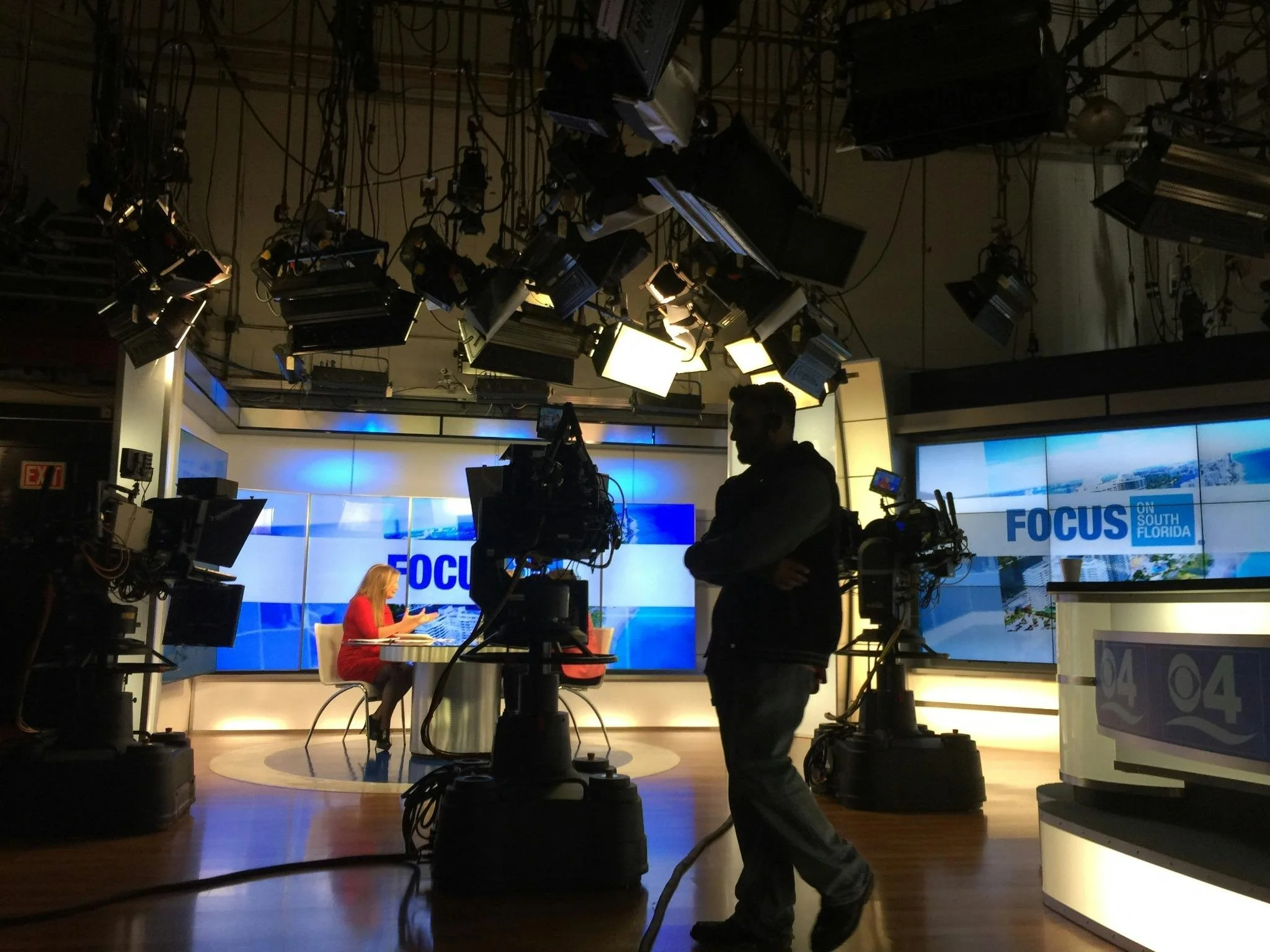
Many regular news viewers think the world is getting more dangerous, even though long-term data provides, at least, a more nuanced vision. Modern news favors negative stories to keep viewers. Photo by Xavier Xanders on Unsplash.
Breaking News, Open Loops, and the Illusion of Constant Crisis
Modern news thrives on unresolved narratives. Breaking news is framed as an unfolding story, full of uncertainty, ever-moving pieces, and emotional intensity—what psychologists refer to as “open loop”. The ever-unresolved stories command attention and invite repeated checking in, not because they may provide more insight, but because the brain is somehow seeking closure.
The problem is that repetition rarely adds understanding, or it does so in very marginal ways. Hearing the same tragedy described 6 times over the course of a day and a half does not deepen clarity or increase agency—it only deepens emotional arousal.
In the last weeks, the terrible shooting in Bondi Beach took place. More recently, there was also an awful fire in a Swiss ski resort. Generally, I prefer to know about these events than not to, but the question is whether there is a significant upside to hearing these stories ten times throughout the day as they unfold, each time learning about a small, new detail. It’s clear that this behaviour isn’t really favoring a better understanding or a sober reflection on the bigger picture—we’re just focusing on the emotional details.
Context is often missing in how many news media outlets report: how rare is this event, how does it compare historically, and what long-term trends matter more than the incident itself? Without these anchors, fear fills the gap and the availability heuristic we mentioned earlier steps in.
Phenomena like terrorism or war casualties feel omnipresent despite long-term declines in per-capita risk globally. When news focuses on the immediacy of violence without any assessment of historical baselines, it creates the illusion of constant emergency.
Once we understand how news captures attention, the next question becomes practical: what do we do instead?
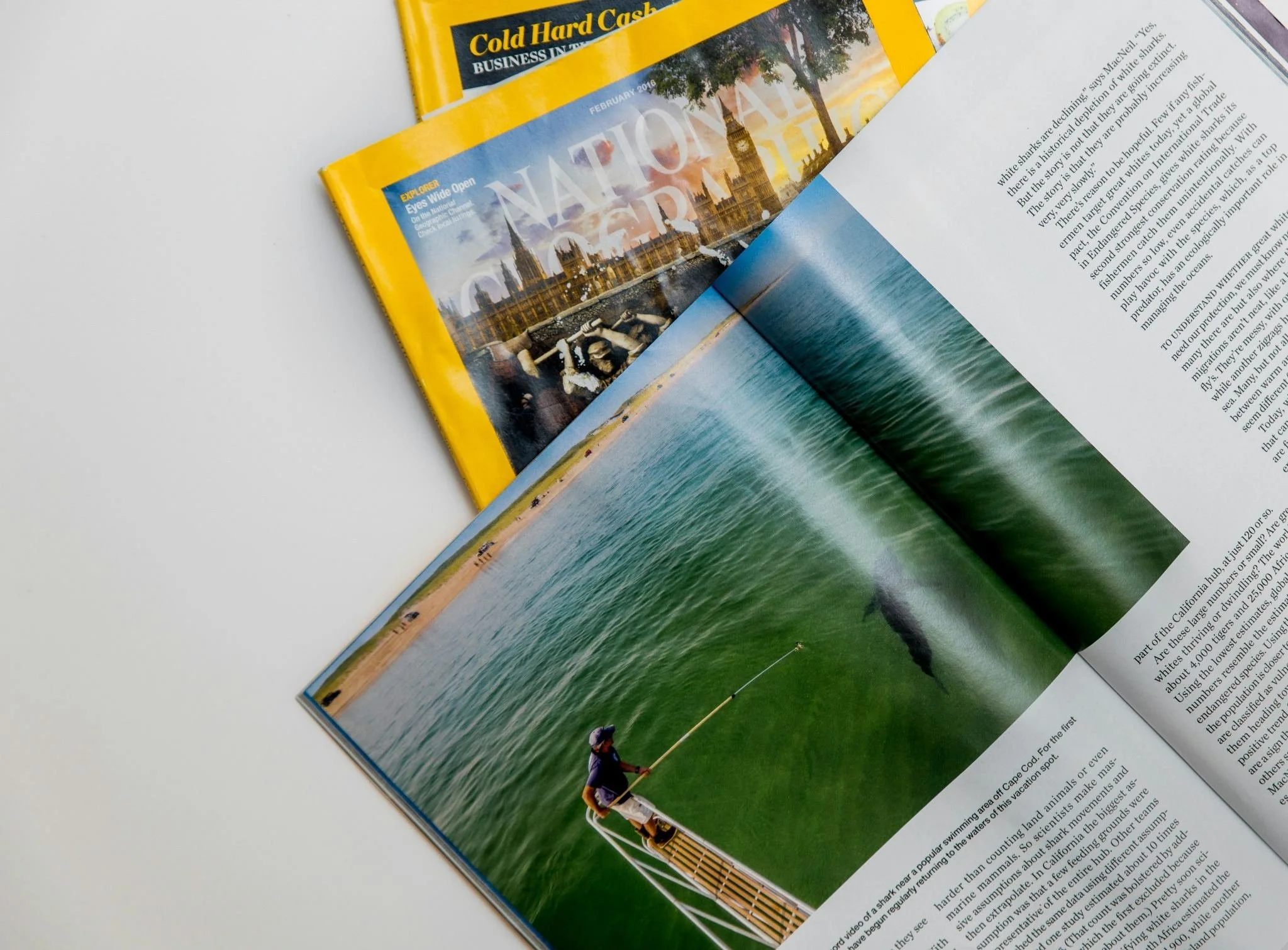
Long-form journalism with weekly or monthly publication frequency will provide a better understanding and reduce information anxiety. Photo by Alexander Andrews on Unsplash.
How to Design a Healthy Information Diet (Without Losing Perspective)
A healthy information diet does not require disengagement from the world, but clear rules around frequency, format, and focus. Shifting from daily news consumption to weekly or even monthly synthesis dramatically improves both emotional regulation and comprehension.
Long-form journalism, reflective podcasts, and curated analyses encourage thinking rather than reacting and place events within broader historical and statistical context.
I find this approach aligns closely with Stoic philosophy. The Stoics emphasized directing attention towards what lies squarely within their control, and engaging with the rest calmly and proportionally. Or as Epictetus said: “the chief task in life is simply this: to identify and separate matters so that I can say clearly to myself which are externals not under my control, and which have to do with the choices I actually control”.
Constant exposure to problems without agency breeds learned helplessness; in contrast, intentional consumption restores a sense of choice and perspective.
Ultimately, an information diet is about sustainability. Just as nobody could thrive on a diet of sugar and stimulants, it’s very difficult to thrive on a diet of perpetual daily crises. By curating how and when we engage with the world, we preserve not only our mental health, but also our ability to understand reality more clearly—and to act wisely where it truly matters.
💬 If you looked back in five years, do you think your current news habits would feel like they improved your understanding—or mainly your anxiety?
If you enjoyed this article, here are some next steps:
👉 Related reading: How to stay hopeful in an age of bad news
👉 Related reading: 25 Stoic Principles for emotional resilience and inner peace
👉 New to Financial Independence? Start with our complete guide to FI and FIRE
👉 Use our free FI Calculator to see how far you are from financial freedom
👉 Subscribe to get free FI tools and the weekly newsletter (one-click unsubscribe anytime)
🌿 Thanks for reading The Good Life Journey. I share weekly insights on personal finance, financial independence (FIRE), and long-term investing — with work, health, and philosophy explored through the FI lens.
Check out other recent articles




























About the author:
Written by David, a former academic scientist with a PhD and over a decade of experience in data analysis, modeling, and market-based financial systems, including work related to carbon markets. I apply a research-driven, evidence-based approach to personal finance and FIRE, focusing on long-term investing, retirement planning, and financial decision-making under uncertainty.
This site documents my own journey toward financial independence, with related topics like work, health, and philosophy explored through a financial independence lens, as they influence saving, investing, and retirement planning decisions.
Frequently Asked Questions (FAQs)
-
An information diet is a deliberate approach to choosing what information you consume, how often, and from which sources. Its goal is to improve understanding and wellbeing, not maximize exposure.
-
It means reducing reactive, high-frequency news consumption and prioritizing slower, higher-quality sources that provide context, trends, and reflection.
-
Lower anxiety, less emotional reactivity, improved focus, and a more accurate long-term view of the world—without becoming uninformed.
-
Because human attention is biased toward threats, and media systems are optimized for engagement. Negative stories reliably attract more attention than neutral or positive ones.
-
Constant exposure to distant crises activates stress responses designed for local threats, creating anxiety without agency or resolution.
-
Studies show frequent news exposure—especially during crises—is linked to higher anxiety and stress, without improving understanding or engagement.
-
Focus on weekly or monthly summaries, long-form journalism, and sources that emphasize trends rather than breaking news.
-
One that balances awareness with emotional regulation, prioritizes context over immediacy, and limits exposure to repetitive, unresolved stories.
-
Reduce daily news checks, unsubscribe from breaking alerts, choose a few trusted sources, and schedule intentional reading times.
-
No. It’s about better consumption, not less care—staying informed in a way that supports clarity, not constant stress.
Join readers from more than 100 countries, subscribe below!
Didn't Find What You Were After? Try Searching Here For Other Topics Or Articles:

<script>
  ezstandalone.cmd.push(function() {
      ezstandalone.showAds(102,109,110,111,112,113,114,115,119,120,103);
  });
</script>