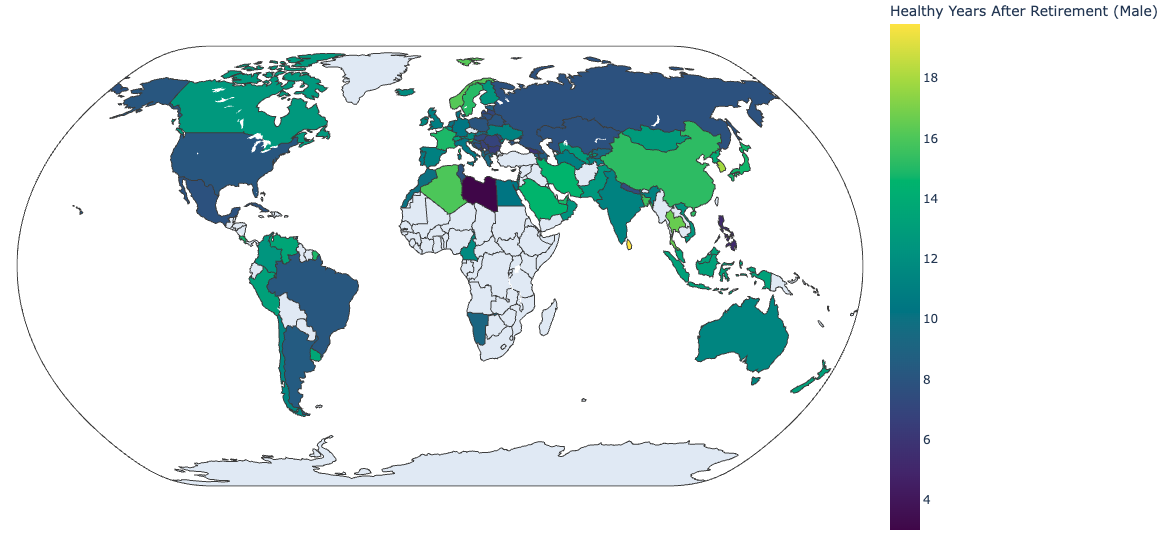
Figure 1: How many healthy years you'll actually enjoy after retirement varies dramatically by country—and by lifestyle. The average American man has just 8 healthy years after retiring; those who invest deliberately in movement, sleep, and nutrition can do significantly better.
Reading time: 8 minutes
TL;DR — Lessons on Healthy Aging From My Grandparents
👵 Healthy aging habits from grandparents who lived long, active lives (to ages 96 and 97)
😊 PERMA mindset & positivity as pillars of emotional well-being across decades
🏊♂️ Daily movement routines—walking, swimming, fasted exercise—that mirror modern longevity science
💵 Money & investing lessons from a 38-year retirement rooted in intentional living and living within their means
❤️ How mindset shapes dignity in aging, and why two people can age so differently
🎯 Practical takeaways for early retirement, healthspan, and building a life that compounds meaning over time
👉 This article is part of our Health & Longevity pillar—the complete guide to healthspan, longevity science, and how it connects to your FIRE (Financial Independence, Retire Early) plan.
Lessons on Early Retirement, Healthy Aging, and a Life Well-Lived
In this blog we write a lot about early retirement, healthy aging, and living a meaningful life. A lot of this influence didn’t come from books or experts—some of it also came from watching my maternal grandparents. They both lived extraordinary lives full of travel, purpose, and strong social connection—yet ultimately each displayed two very different philosophical outlooks in their last years of life. Their lives also offered a real-world example of what extended life after retirement can look like—far beyond today’s average 14–17 years in the US.
I was lucky enough to get a window into their earlier decades too—my grandfather wrote an entire book for the family, documenting their work abroad, the challenges they lived through, and the adventures that shaped them. It remains one of the most meaningful documents in our family history, and it deeply informed how I understand who they were in the years before I ever knew them.
My grandfather’s commitment to capturing his life in writing quietly planted a seed in me. A few years ago, I started journaling, at first about my day-to-day experiences; eventually, though, I found it more pleasurable to write about the books I’d read or simply as a way to engage with ideas. Over time, what started as private writing eventually evolved into The Good Life Journeyplatform you see today—a place where I explore better living across personal finance, health, and philosophy.
In many ways, I think my grandfather’s book represented the first spark.Writing here is therapeutic for me—it allows me to clarify how I feel and think about different topics—but also serves the purpose of helping others better manage their finances and health.
In this article, I break down the specific habits, routines, mindsets, and financial decisions that helped my grandparents live long, purposeful, and healthy lives well into their 90s. Whether you're pursuing early retirement, better healthspan, or simply want to age with dignity, these lessons offer a practical blueprint grounded in lived experience.
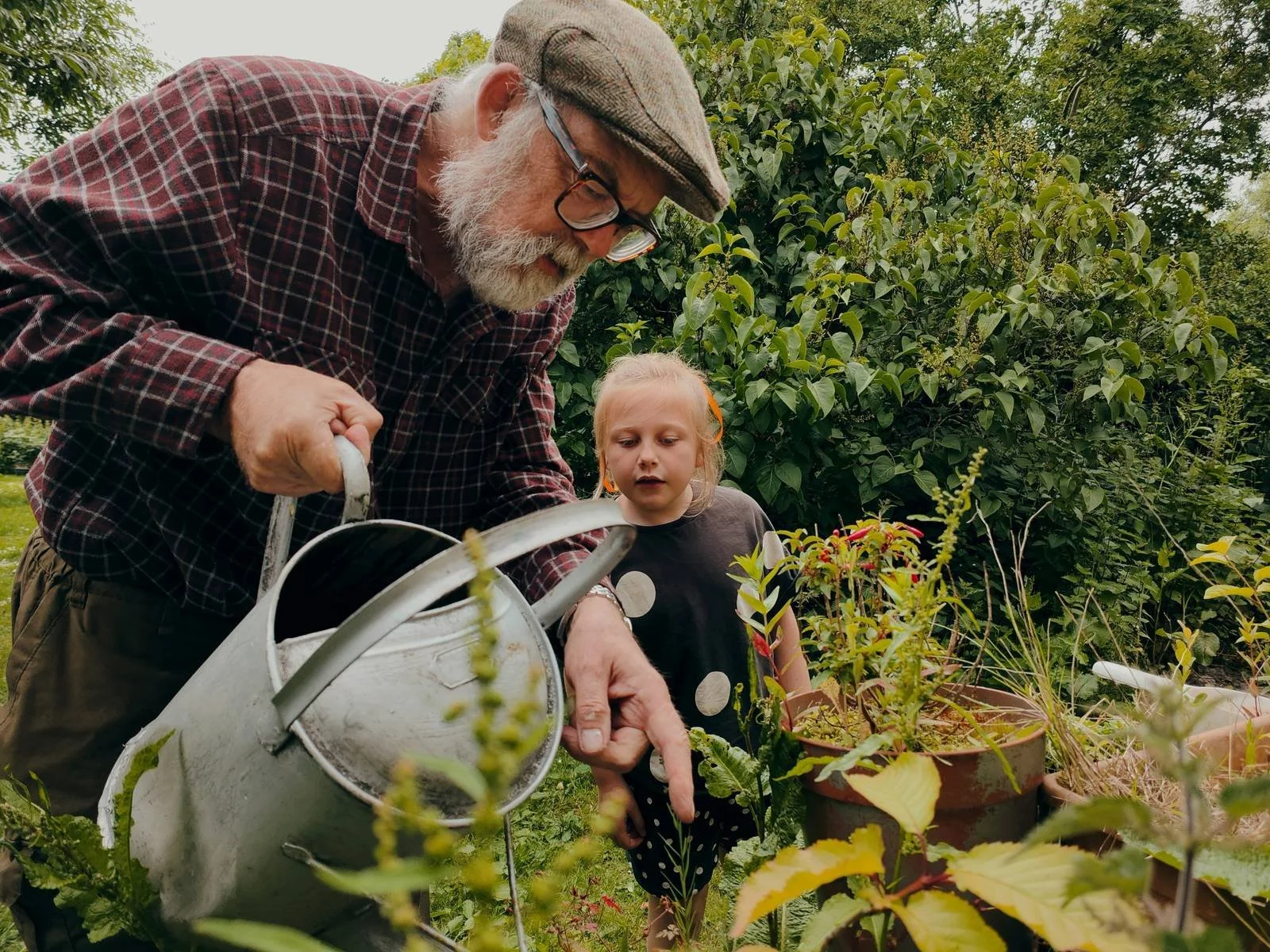
Gardening, walking, and daily natural movement were woven into my grandparents' retirement—not as a strict protocol, but as a way of life. This mirrors exactly what Blue Zone research shows: health compounds through environment and habit, not willpower.
The Power of Positivity and PERMA in Healthy Aging
I feel like my grandparents lived the PERMA model long before Martin Seligman ever described it. Throughout most of their lives they radiated positive emotion (“P”)—not in the superficial sense of always smiling, but in the deeper sense of always keeping a positive outlook on life and carrying perspective, calm, and gratitude until nearly the end.
They were also both deeply engaged (“E”) in every chapter of their lives. Even in early retirement, they chose to not be passive; my grandfather volunteered weekly in the local community and continued to take on short-term or part-time work assignments overseas for several years, while my grandmother—always 20 years younger in energy than her age would suggest—poured her heart into organizing and leading travel groups around the world. They cultivated interests, routines, and friendships that kept their days sharp and full.
Their relationships (“R”) were incredibly strong—they enjoyed genuine friendships, rich family ties, and an ability to reach out and make new connections wherever they went. My grandmother in particular, and with the exception of the last years, loved people and went out of her way to reach out to others. Loneliness is one of the strongest predictors of poor aging outcomes, and I felt they instinctively excelled at this—they built a lifestyle and early retirement that protected them from it.
Meaning (“M”) and accomplishment (“A”) were the threads that tied it all together. They lived abroad working in service-driven careers (USAID), raised their family across different countries and cultures, traveled extensively—their life-long passion—and retired into a rhythm that continued to make them thrive.
Nowadays, many prefer using the updated PERMA+, the “+” standing for physical vitality. This was a dimension they embodied without ever calling it “lifespan or healthspan optimization”. They woke up early, walked long distances, swam laps at their local pool daily, and maintained a stable, very active lifestyle into their late 80s/early 90s.
Without knowing it, it feels like they were living the exact formula we now know helps people not only live happier lives, but also age better, live longer, and stay cognitively sharper.
Personally, it’s very inspiring for me to see that my grandparents—born in the 1920s—managed to achieve this level of health and quality of life well into their early 90s. What could we manage today with access to better information, technology, and healthcare? They didn’t have access to science-based longevity protocols—of course, they didn’t know what VO₂max or resistance training was. And yet intuitively they crafted a healthy lifestyle they managed to consistently sustain over decades.
What makes their longevity even more striking is how far it sits above today’s averages. In the US, a man retiring at 65 can expect roughly 13.9 additional years—of which only 8.1 are relatively healthy. For women, it’s about 16.7 years and 9.9 healthy years of functional independence.
After retiring at 58, my grandparents lived 38 and 39 years—nearly three times the modern male average. This represents a stark contrast to today, where retirement ages in many wealthy countries are moving toward 70 or beyond.
Their healthspan—at least, 30-32 years in excellent health—redefines for me what’s possible when lifestyle, purpose, and connection compound over decades with today’s improved access to science-based longevity and healthspan guidelines. The distinction matters financially, too: we explored the ROI of investing in your health in a recent article.
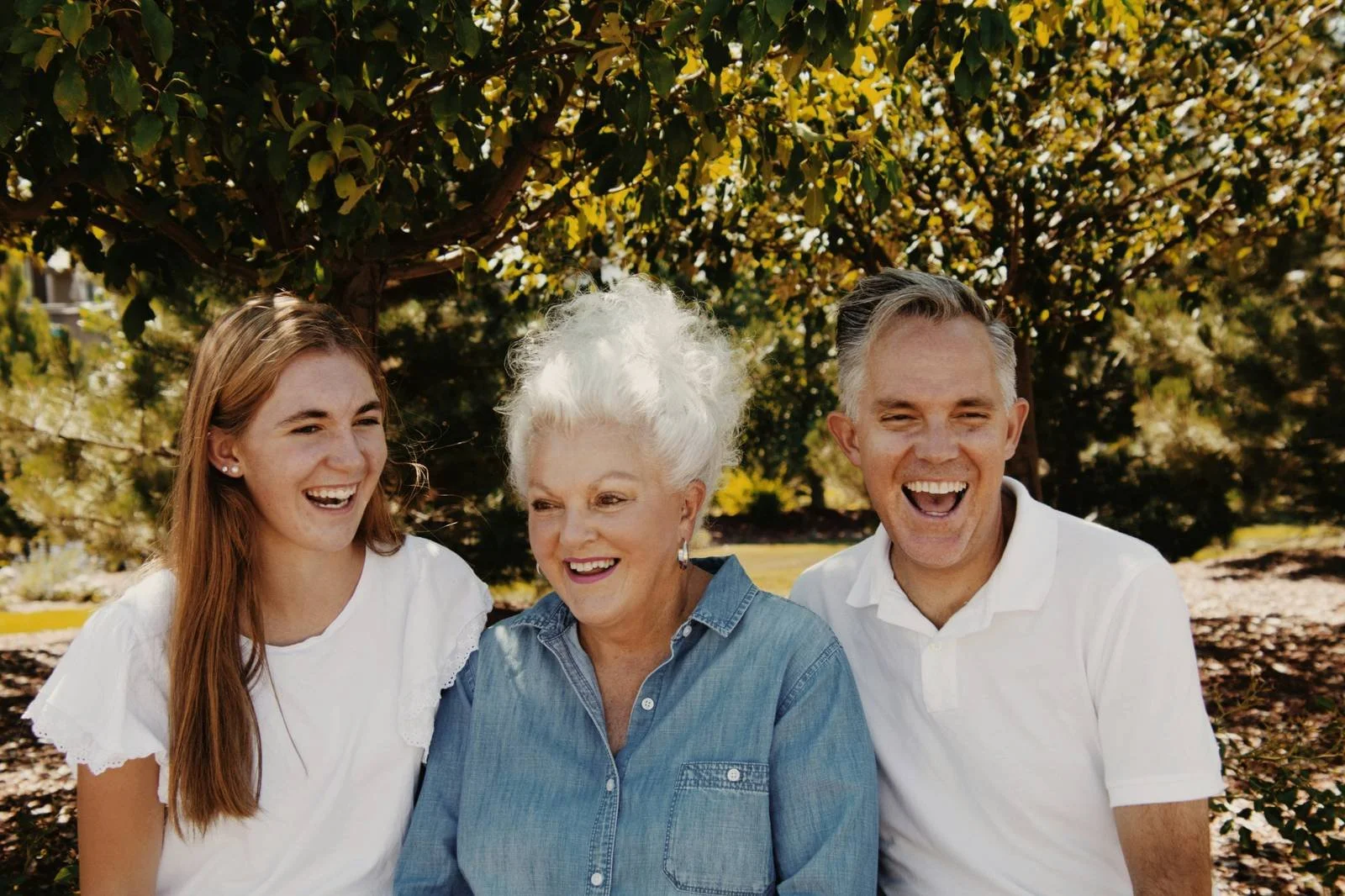
Strong family ties and genuine social connection were central to my grandparents' long healthspan. Loneliness is one of the strongest predictors of poor aging outcomes—they built a retirement that protected them from it at every stage.
Purposeful Work and Retiring at 58: Lessons From a Long, Fulfilling Life
My grandparents’ careers were important to them but did not fully define who they were, and, unlike today’s trend of quiet quitting, my grandfather felt deeply connected to the purpose behind his work.
His work with USAID took them to developing countries, where he felt he was contributing something meaningful (think work related to agricultural efficiency or water sanitation projects). Often, they worked under challenging circumstances (e.g., in Laos during the Vietnam War), but always with a sense of purpose in helping others.
My grandmother found fulfillment working as a kindergarten teacher and later reinvented herself as a travel agent who organized and led her own tours—her charisma was enough to make others not only join the trips, but repeat other travel experiences with them over and over in the years ahead.
Their careers blended service, curiosity, travel, and connection—exactly the ingredients that modern research associates with long-term wellbeing.
What struck me most is how healthy their attitude towards work was. I’m sure they worked hard, but never allowed it to consume them or dictate their desired lifestyle. I also have the feeling they didn’t overemphasize the work dimension over others in their lives. In his book, they clearly over-emphasize people, culture, and adventure over job titles. While my grandfather sometimes would also enjoy talking about the work itself, their stories were usually more centered around the relationships they made and the communities they lived in.
I think they achieved a very uncommon balance many of us chase today—doing meaningful work they cared about, but never letting it overshadow the rest of their lives.
Then came the part that shaped me the most: they retired at age 58. In today’s world, that sounds like FIRE (Financial Independence, Retire Early)—back then I remembered being very impressed by it. Of course, being part of the civil service, it may have been more common than I thought at the time.
And yet, retirement didn’t mean their lives slowed down. My grandfather chose to accept short-term and part-time assignments abroad and my grandmother started organizing travel tours that often enabled both of them to travel for free for multi-week tours around Europe, Asia, and Latin America.
They stayed mentally active and never drifted into the subtle stagnation—mental and physical—that slowly erodes people’s health. Their 38-year early retirement was not just long—it was intentional. They offered a real-life example of what early retirement can look like when you fill the extra years with meaning, relationship, and engagement.
Their lifestyle choices extended far beyond work—they built daily routines that supported exceptional longevity.
Movement, Daily Routine, and the Foundations of Healthy Aging
When I think of my grandparents, I always picture the same morning ritual: wake up early, walk, swim laps at the local pool, spa, shower, and breakfast. This was how they started almost every single day of their retirement.
Without being a longevity protocol, it certainly resembles one: long walks for low-intensity endurance; laps for cardiovascular fitness; spa time for mobility and recovery. VO₂max is considered the single best predictor of longevity, and they unknowingly trained that system almost every day. Of course, they didn’t know about VO₂max, zone 2, or resistance training, yet overall it’s no wonder their lifestyle and routines enables such long lives—96 and 97.
They even benefited from something we now have a name for—fasted exercise. Their routine unknowingly created a 14-hour overnight fasting window, which modern metabolic research shows improves insulin sensitivity, mitochondrial health, inflammation markers, and long-term metabolic health. I don’t think they did this intentionally; they just liked mornings filled with movement before sitting down for breakfast.
Looking back with today’s science, it’s impressive how closely their habits matched what the longevity community now recommends.
Their nutrition wasn’t “Blue Zones perfect”, but for mid-20th-century America, they did really well. The combination of movement, lack of stress, social connection, and relatively whole-food nutrition mirrors many longevity hotspots around the world.
They ate real food, avoided excess sugar and processed junk, cooked mostly at home, and kept portions reasonably moderate. Their diets were likely still too meat-heavy, but by avoiding the sugar and other negative items, it still created a solid foundation for an incredibly long and functional healthspan.

Travel was my grandparents' biggest passion, and they pursued it well into their late 80s.
Investing, Frugality, and Financial Lessons From a 38-Year Retirement
My grandfather was investing in stocks long before index funds were popularized, offering timeless investing lessons from an older generation that understood patience and long-term thinking. Yes, he was stock-picking—and in hindsight the opportunity cost was probably very large. But compared to the average Americans of this generation, he was still far ahead. He bought long-term, held for decades, and avoided the speculative mania that pulls so many people off course.
He loved “boring” companies—which he perceived as defensive and steady, as opposed to buying growth stocks. He also made sure to set up stock accounts for his grandkids—which inspired us to do the same for our kids. I can’t help but think that my interest in personal finance likely traces back to watching him track his stocks as they scrolled across the bottom part of the TV. Of course, setting up an account in my name as a kid also helped.
And although my grandfather stock-picked, he never chased speculative “unicorn” companies, preferring steady, durable businesses. Looking back, I suspect that mindset deeply influenced my own skepticism of hype-driven investing and my preference for long-term, no-thrills investing.
What made their investing possible was also their relative frugality. I remember sitting with my grandfather cutting coupons at the kitchen table and comparing grocery flyers to find the best deals. They certainly didn’t need to do it; it was simply part of how he approached life: paying attention, valuing resources, and appreciating what they had.
Those memories—particularly the coupon cutting and supermarket shopping with him—shaped me deeply. To this day, I love grocery shopping—which I realize almost everyone else finds boring—and naturally price-compare all the time in his honor. Now I take my son along, passing on the same ritual.
My grandparents complemented each other beautifully—my grandmother would prefer to spend, my grandfather to save. But ultimately, they managed to reach a nice balance that enabled them to enjoy a solid financial foundation while enjoying a very long retirement full of travel and adventures.
Beyond finances, their life choices had cascading effects on the generations that followed. Their years living abroad shaped my parent’s worldview and their own wish to live abroad. Eventually, it did the same for me—leading me to live in five different countries.

The longest-lived people in the world don't follow strict protocols, but live in environments and communities that make healthy behaviour the natural default. Happiness and connection can be as important as diet and exercise.
Mindset, Healthspan, and Aging With Dignity
The most powerful lesson came in their final years, though, when their paths diverged. My grandfather started to age quicker and, towards the end, suffered from dementia. It eventually took his memory, but never his gratitude or positive demeanor. He continued to live through the joys of his wife, children, and grandchildren. One step at a time, his world became smaller, but his appreciation of life and sweetness did not disappear. I don’t think he experienced some of the most common regrets of the dying.
This is what gerontologists call “self-transcendent aging”—finding meaning in connection through others, not circumstances—and it is closely linked to aging in dignity, with a calm acceptance of what nature has in store for you. It captures a broader truth: people age better emotionally when they stay relationally open, remain grateful, and focus on contribution rather than loss. In hindsight, he displayed many philosophical traits of Stoicism—especially, acceptance and focusing only on things under his control.
In contrast, my grandmother—despite an extraordinary life by any measure—struggled significantly more in her final years. Losing her husband was naturally a tough blow from which she never fully recovered, but her suffering went much deeper. She became inwardly focused, preoccupied constantly with her own decline, detached from most of her family, and less willing to engage in the world around her.
The last few years were sad to witness. She had five great-grandchildren to enjoy, yet preferred to not see them. She wanted constant attention from my mother and had difficulty finding any sense of meaning outside herself.
Watching the contrast during the declining years between my grandparents was a powerful reminder: how we orient our minds in midlife not only affects how we enjoy today, but also sets the emotional foundation for decades to come. If we choose to live and age with gratitude, humility, and connection, we will become calm and accepting towards the end. Otherwise, life’s exit can be really hard, lonely, and painful—including for their caring family members.
A final choice they both got right, though, was deciding to downsize their home and relocate early—while they could still direct the process themselves. They decided to move closer to their son and were able to choose the community they would spend their final years in. So many people postpone this decision until crisis forces it upon them—the postponement is really deciding to burden others with what should have been their decision.
Instead, they downsized, moved across the state, and entered a supportive environment while they still had the clarity and autonomy to choose. That decision was one of the last elegant acts of foresight I truly respect and also an important lesson I hope to carry with me.
In the end, their lives reminded me of something that is relevant to most of us: so much of our relationship with money, health, work, and even aging is inherited—sometimes consciously, often not—from the families who raised us, including our grandparents.
An important task in adulthood is learning to keep the inherited habits that help us thrive, and gently letting go of the patterns and behaviors that don’t. When I look back, I realize how much of my approach to saving, traveling, being healthy, and staying curious came directly from them.
Their lives weren’t perfect, but the parts they got right—living with purpose, expressing gratitude, and seeking connection—have become anchors for how I aim to live today. If anything, writing this piece today has reminded me how much good we can take from previous generations, and how each of us gets to build on that foundation to design a healthier, freer, and more meaningful life of our own.
💬 What’s one tiny upgrade to your health, money, or mindset you could start today that nudges you toward a longer, freer life? Do you have other related family stories you could share?
👉 New to Financial Independence? Check out our Start Here guide—the best place to begin your FI journey.
👉 Unsure when you could retire? Use our Financial Independence Calculator (free for email subscribers) to plug in your numbers and see how soon you could go into early retirement.
🌿 Thanks for reading The Good Life Journey. I share weekly insights on personal finance, financial independence (FIRE), and long-term investing — with work, health, and philosophy explored through the FI lens. If this resonates, join readers from over 100 countries and subscribe to access the free FI tools and newsletter.
Disclaimers: I’m not a medical professional, and this article is not medical advice. I’m not a financial adviser, and this is not financial advice. The content on this website is for informational purposes only. Always consult your doctor or a qualified healthcare professional before making any changes to your diet, exercise routine, or medical treatment. Please consult a qualified financial adviser for personalized advice.
Check out other recent articles























About the author:
Written by David, a former academic scientist with a PhD and over a decade of experience in data analysis, modeling, and market-based financial systems, including work related to carbon markets. I apply a research-driven, evidence-based approach to personal finance and FIRE, focusing on long-term investing, retirement planning, and financial decision-making under uncertainty.
This site documents my own journey toward financial independence, with related topics like work, health, and philosophy explored through a financial independence lens, as they influence saving, investing, and retirement planning decisions.
Frequently Asked Questions (FAQs)
-
Healthy aging depends on daily movement, strength and aerobic training, strong social connection, meaningful engagement, and low chronic stress. My grandparents unknowingly followed many of the same routines the longevity science community now recommends—walks, swimming, routines, volunteering, and a purposeful mindset.
-
Mindset shapes emotional resilience, social connection, and the ability to find meaning later in life. Research shows gratitude, purpose, and self-transcendence improve cognitive and psychological aging. I saw this firsthand: one grandparent aged with peace and gratitude, the other struggled significantly.
-
Older generations often demonstrate the value of purposeful work, simple living, frugality, and long-term thinking—principles at the core of early retirement (FIRE). My grandparents retired at 58 and thrived for nearly four decades because they filled their lives with engagement, relationships, and curiosity.
-
VO₂max and muscle mass are two of the strongest predictors of both lifespan and healthspan. Daily routines like walking, swimming, and light strength training protect metabolic health, cognitive function, and mobility. My grandparents’ morning routine are not far from modern “longevity protocols.”
-
Simple living, consistent investing, and avoiding speculation can create decades of freedom. My grandfather invested in stable companies, practiced frugality, and lived well below his means—habits that enabled a 38-year retirement filled with travel and purpose.
-
Developing gratitude, maintaining relationships, and cultivating interests beyond work all contribute to aging with dignity. Midlife mindset patterns often become late-life emotional defaults. My grandparents’ very different final years illustrated how essential this emotional preparation is.
Join readers from more than 100 countries, subscribe below!
Didn't Find What You Were After? Try Searching Here For Other Topics Or Articles: