
Tarifa, Spain. Spain recently ranked as one of the best early-retirement destinations in Europe. Photo by Conrad van der Walt on Unsplash.
Reading time: 7 minutes
Author’s note: I come from a very international background—I’ve lived in five countries and understand first-hand the pros and cons of moving. In early retirement, I’m unlikely to stay full-time in Germany, which makes exploring seasonal relocation a natural fit.
Quick answer — What is seasonal geoarbitrage?
Seasonal geoarbitrage means splitting your year between two or more countries to lower costs and improve quality of life—without permanently relocating. Instead of moving once, you rotate between locations to match climate, family proximity, and budget. In our example, a Germany–Spain–France rotation can reduce a €60K annual retirement budget to around €51K, lowering your effective withdrawal rate from 4% to 3.4% and meaningfully extending your portfolio's longevity.
What you'll get in this article
✔ How seasonal geoarbitrage differs from permanent relocation
✔ A worked case study: Germany, Spain, and France on a €60K budget
✔ The financial impact—withdrawal rate, portfolio protection, real numbers
✔ 10 lifestyle and health benefits of seasonal rotation in retirement
✔ The real trade-offs and how to make it work sustainably
TL;DR — Seasonal Geoarbitrage at a Glance
🏡 Definition: Splitting your year between countries to lower costs and improve quality of life.
💶 Example: Germany–Spain–France rotation = ~15-25% savings
🌞 Benefits: Better climate, stronger healthspan, cultural enrichment, lower withdrawal rate (e.g., 3.4% vs 4%).
🧭 Ideal for: Early retirees or location-flexible earners wanting connection and flexibility.
🚀 Takeaway: Live better for less—without leaving your roots behind
Note on scope: This post focuses on seasonal geoarbitrage—splitting the year between multiple locations—rather than permanently relocating.
👉 For the full framework on geographic arbitrage, including permanent relocation, working abroad, taxes, destination rankings, and timeline impact, see our comprehensive guide to retiring abroad through geographic arbitrage.
If you’re interested in more permanent geoarbitrage:
• Country rankings by region: See our guides to the best countries to retire in Europe, Asia, Latin America, and the Nordics.
• Timeline math: Learn how many working years geographic arbitrage can realistically save you.
Seasonal Geoarbitrage: A Long-Term Strategy to Lower Costs, Raise Well-Being, and Keep Your Roots
Most people thinking about retiring abroad imagine a one-way move—pick a country and move there for good. But there's a middle path that most retirement planning guides ignore: splitting your year between two (or even three) countries, being home for the seasons that matter—school holidays, family gatherings, summer—and spending the rest somewhere warmer, cheaper, or more interesting.
That's seasonal geoarbitrage. And unlike permanent relocation, it doesn't require giving up your roots — just reorganizing your calendar. In previous articles, we looked at how retiring permanently in countries like Thailand or Malaysia can materially shorten a FIRE (Financial Independence, Retire Early) timeline. Seasonal geoarbitrage takes the same principle in a different direction: instead of relocating once, you rotate between regions to get the best combination of cost, climate, and lifestyle throughout the year.
In this post, we’ll:
1️⃣ Define what makes seasonal geoarbitrage different from classic “move once and stay” approaches.
2️⃣ Run a practical case study that includes living in Berlin (Germany), Andalucía/Asturias (Spain), and southwest France on a €60K early-retirement budget. If you’re a regular reader on the blog, I think you can guess for who this exploratory case study could be designed for.
3️⃣ Explore the top 10 financial, lifestyle, and cognitive benefits of seasonal geoarbitrage.
4️⃣ Explore thereal-world trade-offs and systems that could make it work sustainably.
Below, we’ll break down real examples, numbers, and trade-offs to help you decide whether seasonal relocation makes sense for your retirement plan.

How about spending a few months per year in France’s relaxing countryside? Photo by Michiel Mulder on Unsplash.
Rethinking Geoarbitrage: From One-Way Relocation to Seasonal Living
Traditional geoarbitrage often means moving once and staying—picking one destination for life after reaching Financial Independence. Seasonal geoarbitrage flips the idea; instead of permanently relocating, you cycle between two or more locations throughout the year, aligning your cost of living, climate, and lifestyle preferences.
This is just a fancy concept that lies behind what so many retirees already do today—who hasn’t met someone from the UK, Netherlands, or Germany living part of the year in their home country and part-time in Mediterranean countries like, Spain, Italy, or Greece?
What I find most appealing about this approach is what’s missing in full relocation: your ties to family, friends, familiar healthcare, and a sense of home. In other words, you don’t have to trade community for affordability. Sure, it sounds great on paper to retire much earlier and move to Thailand, but in practice this usually means being far from your loved ones and giving up other lifestyle benefits.
Seasonal geoarbitrage creates a middle ground—staying close to family and friends without giving up that spirit of adventure many retirees crave. Of course, this will not be appealing to everyone, and that’s fine.
Personally, moving is part of both my own and my family’s DNA, I’ve lived in five countries and I appreciate how each new culture reveals a different pace and way of life. I’m currently based in Germany, but remain unconvinced I’d want to spend 12 months a year here forever. Most of my family and many friends live in other countries, so designing an early retirement around different geographies make sense for me—it’s much more than a cost-optimization exercise.
For me, staying permanently in one place in early retirement almost feels like I’ve given up on the others. In contrast, seasonal living allows me to keep my base and expand my range—it could allow me to stay close to my kids in Germany during spring and summer, but escape the cold and refresh ties with other family and friends during autumn and winter.
Before diving into the pros and cons of seasonal relocation, let’s look at a simple case study to see what the numbers reveal.

Nazaré, Portugal. Portugal recently topped our ranking of best places to retire in Europe. Photo by Karina Skrypnik on Unsplash.
Case Study: Seasonal Relocation Between Germany, Spain & France
Imagine your early-retirement budget is €60,000 per year (roughly $70,000) for a comfortable, full-time early-retirement in Berlin. What would happen if you decided to live only six months in Berlin instead—close to grown-up kids—three months in Asturias, Andalucía, or Madrid (Spain), and the remaining three in a French rural setting—say Dordogne?
Expatistan’s cost-of-living (COL) comparison shows both Oviedo—the capital of Asturias—and Granada—a popular destination in Andalucía—are roughly 29% cheaper on average than Berlin. Going somewhere rural in Asturias or Andalucía you’d certainly expect to see even larger COL differences, but let’s use this number for a conservative estimate.
Similarly, Limoges (France)—used here as a proxy for southwest France—shows a cost of living roughly 30% lower than Berlin. Rural Dordogne would likely be cheaper still, but again, we’ll keep this rounded baseline for realism.
What does this mean financially for our seasonal geoarbitrage plan to spend more time with family and friends and escape the cold weather of Berlin? Doing the math, it means dropping your annual cost of living from €60,000 to €51,000.
At first glance, it may not feel like much, but assuming you’d followed the 4% rule of thumb and had a portfolio target of €1.5M (i.e., 25 times the annual spend of €60,000), in early retirement you’d be using a 3.4% withdrawal rate instead—a far more conservative withdrawal rate. These differences in withdrawal rates have a large impact in protecting your portfolio from sequence of return risk (SORR) in early retirement and generally to ensure the longevity of your portfolio in the future.
The financial side is nice to have, but isn’t the primary goal of seasonal geoarbitrage—it’s having a more dynamic, healthier, and richer lifestyle. Now that we’ve seen the math, let’s explore what makes this approach so enriching beyond the numbers.
Lifestyle Benefits of Seasonal Geoarbitrage for Retirees
Seasonal geoarbitrage isn’t just about cutting costs—but about upgrading quality of life. For starters, it lets you align your life with the seasons that suit you best. Winter in the Berlin area? Trust me, that’s not for everyone. And if I ever wanted to experience a real winter wonderland, I’d consider the Nordic countries—unlike Berlin, where snow is getting rare. Spring and summer there, though, surrounded by lakes and outdoor opportunities? Count me in.
My back-of-the-envelope exercise of what an exciting and seasonally-optimized lifestyle could look like for us would be as follows: spring and summer in Germany (near kids and extended family), autumn in SW France, and winter in one of Spain’s coastal regions.
This design would allow us to spend meaningful amounts of time in three countries we love, see more of our family and friends, and avoid the climate extremes that all three countries offer—we're certainly avoiding Spain in summer in the future). This ideal climate loop supports overall more time outdoors and, as a result, more well-being.
Living part of the year in different countries arguably also keeps you mind young. Engaging with different languages on a day-to-day basis has been shown to delay dementia onset by 4-5 years on average, and regularly switching between languages or cultural contexts improves cognitive flexibility.
But beyond the science, it’s also just deeply satisfying: new foods, new perspectives, new routines. Your sense of time probably expands when every few months feels like you’re entering a new chapter. Understandably, many people get tired of traveling, but if you’ve tried it, you know that slow travel feels different. Spending multiple months abroad is very different than racing to visit a country for a one-week holiday.
Finally, seasonal movements literally prevents stagnation. Many retirees find full-time living abroad in one spot monotonous after a few years when the novelty has worn off. Instead, moving seasonally—and even being able to change the destinations, if desired—injects novelty and purpose, without the chaos of full-time nomadism.
Each place you go back to has its own rituals, which you are familiar with. The transitions between the seasons become something you look forward to even more.
Next, let’s look at the top reasons explaining why early retirees could consider this hybrid lifestyle.

Kalymnos, Kalymnos, Greece. Greece recently made our top 5 best locations for retirement in Europe. Photo by Mark on Unsplash.
Top 10 Reasons why early retirees should consider Seasonal Geoarbitrage in Early Retirement
Let’s now formalize some of the most appealing arguments for considering seasonal geoarbitrage after reaching Financial Independence. Seasonal geoarbitrage combines flexibility, purpose, and cost-efficiency in a way that few other retirement models do. It’s not about being a perpetual traveler—personally, I would find that exhausting—but about being intentional with your time, money, and seasons. Remember, you are just cycling between different homes.
Here are ten compelling reasons why this hybrid approach could deserve a spot in your FI strategy.
1️⃣ Cost savings without full relocation. As we saw above, you can lower your annual spend by at least 15% without giving up your home base, simply by optimizing where (and when) you live. Over a long retirement, those savings compound significantly. Of course, there are cheaper destinations than France or Spain, so this 15% value is fairly conservative. It’s also based on city COL—moving to rural areas would also observe larger differences in COL.
2️⃣ Built-inprotection against sequence of return risk (SORR). By spending part of the year in lower-cost regions, you indirectly shield your portfolio from damaging stock market downturns that could derail your plan during the critical first years of retirement.
3️⃣ Better climate balance and more outdoor living. Seasonal rotation allows you to choose the best weather in each region—escaping northern European winters and southern European heatwaves. This improves daily well-being, sleep, and healthspan.
4️⃣ Cognitive and emotional health benefits. Living across cultures keeps your mind active as a default—you’re not susceptible to stagnation or mental declines experienced by many retirees. Studies show using different languages can delay onset of neurodegenerative diseases by 4-5 years. Learning new routines, languages, or local customs keeps cognitive flexibility sharp.
5️⃣ Enhanced sense of time and novelty. The year simply feels richer when divided into chapters to look forward to. Life could gain a rhythmic structure that many find deeply fulfilling.
6️⃣ Broader community and social ties. Instead of losing social connections (i.e., moving full-time to Thailand), you can maintain and increase them. You maintain your family ties at home while building new friendships and local networks in your seasonal destinations.
7️⃣ Cultural and culinary enrichment. Food, traditions, and daily rituals vary across regions. Experiencing multiple ones not as a tourist, but as a part-time resident brings a deeper sense of joy and perspective.
8️⃣ Physical activity and healthy lifestyle. Some regions naturally encourage more walking, hiking, and time outdoors as part of their daily life. This lifestyle shift can be subtle but a powerful boost to long-term health.
9️⃣ Psychological safety and continuity. Since you’re not breaking ties with your home base, the transition feels less risky. You can even experiment gradually, e.g., try one or two rotations in different places per year to see if it feels right for you.
🔟 Future-proofs your lifestyle. Seasonal geoarbitrage builds adaptability into your retirement plan. Instead of locking yourself into one single cost structure or climate, you maintain optionality. If prices rise, health needs or family circumstances change, you can pivot between places effortlessly.
Together, these benefits make seasonal geoarbitrage a powerful type of “flexible independence”—where life feels both rooted but dynamic, stable yet adventurous. You gain variety, financial resilience, and a rhythm that keeps both mind and body young.
Of course, there are also some trade-offs to consider.

Positano, Italy. Italy is a popular retirement destination—even if it din’t make our top 5 ranking for Europe. Photo by Tom Robak on Unsplash.
Making Seasonal Living Sustainable: Real-World Trade-offs & Final Thoughts
Of course, no lifestyle is perfect. Seasonal living also brings a few logistical and practical trade-offs worth understanding.
The most obvious disadvantage relates to logistical complexity—managing two or three residences or short-term rentals does require substantial planning and storage solutions (e.g., if you’re subletting one or multiple homes). Healthcare access and tax considerations can also get tricky when you cross borders frequently, so doing proper research is important. Often, if you stay for over half a year in your home country, a lot of complexity is reduced.
One piece of the logistics is refreshingly simple, though: the money. Unlike a permanent move, seasonal living usually doesn’t require a foreign bank account at all—a single multi-currency account with a debit card covers both homes, spending at the real exchange rate wherever the season finds you.
Housing costs are another factor. The math (and logistics) works best if you own your home. Paying two rents simultaneously likely erodes any of the financial benefits of moving to lower COL places. If you’re willing to sublet your place, that’s great, but it does come with further logistical considerations to consider.
Moving constantly may create fatigue for some. Although I think this is minimized greatly if you’re cycling between places you know well, for some it could be tiring. And, of course, your desire to move around may change over time—what feels exciting in your 40-70s may not be so much fun in your 80s and 90s. Either way, it’s probably best to start small: try a three-month pilot in one location before designing a full annual cycle.
This is essentially what we’re doing pre-retirement: using Germany’s generous parental leave system as annual mini-retirements to test slow travel in different countries—including rural France this summer—well before any seasonal geoarbitrage plan needs to be locked in.
Two risks worth factoring into any seasonal geoarbitrage plan. First, the cost advantage of your chosen destination can narrow over time—popular Southern European destinations like coastal Spain and Portugal have seen meaningful price increases over the past decade, driven by foreign demand and constrained housing supply. Our guide to geoarbitrage and rising costs covers this in detail.
Second, some of these same destinations have also seen growing anti-tourism sentiment in recent years—worth weighing for seasonal residents specifically, since you’re both a recognizable foreigner in the community and, by occupying a rental for several months at a time, removing that unit from the local market in much the same way a short-term tourist rental conversion would.
But for those who enjoy a touch of adventure or have lives in very international settings, it’s hard to overstate the upside. Seasonal geoarbitrage offers a graceful alternative to two extremes—staying stuck in one place out of habit or uprooting permanently entirely for financial reasons. Seasonal geoarbitrage allows you to keep your roots, stay close to friends and family for extended periods time, protect your nest egg, and design a calendar that matches your lifestyle preferences.
In the end, this isn’t about chasing lower prices at any cost—but about purchasing more freedom with the same money—a core theme we discuss at The Good Life Journey. For many pursuing Financial Independence, it’s a way to make every season—financially and personally—work in your favor.
💬 Would you ever consider splitting your year across countries in early retirement—say, six months near family and six months somewhere warmer or cheaper? What kind of seasonal loop and post-FI lifestyle would you design?
If you enjoyed this article, here are some next steps:
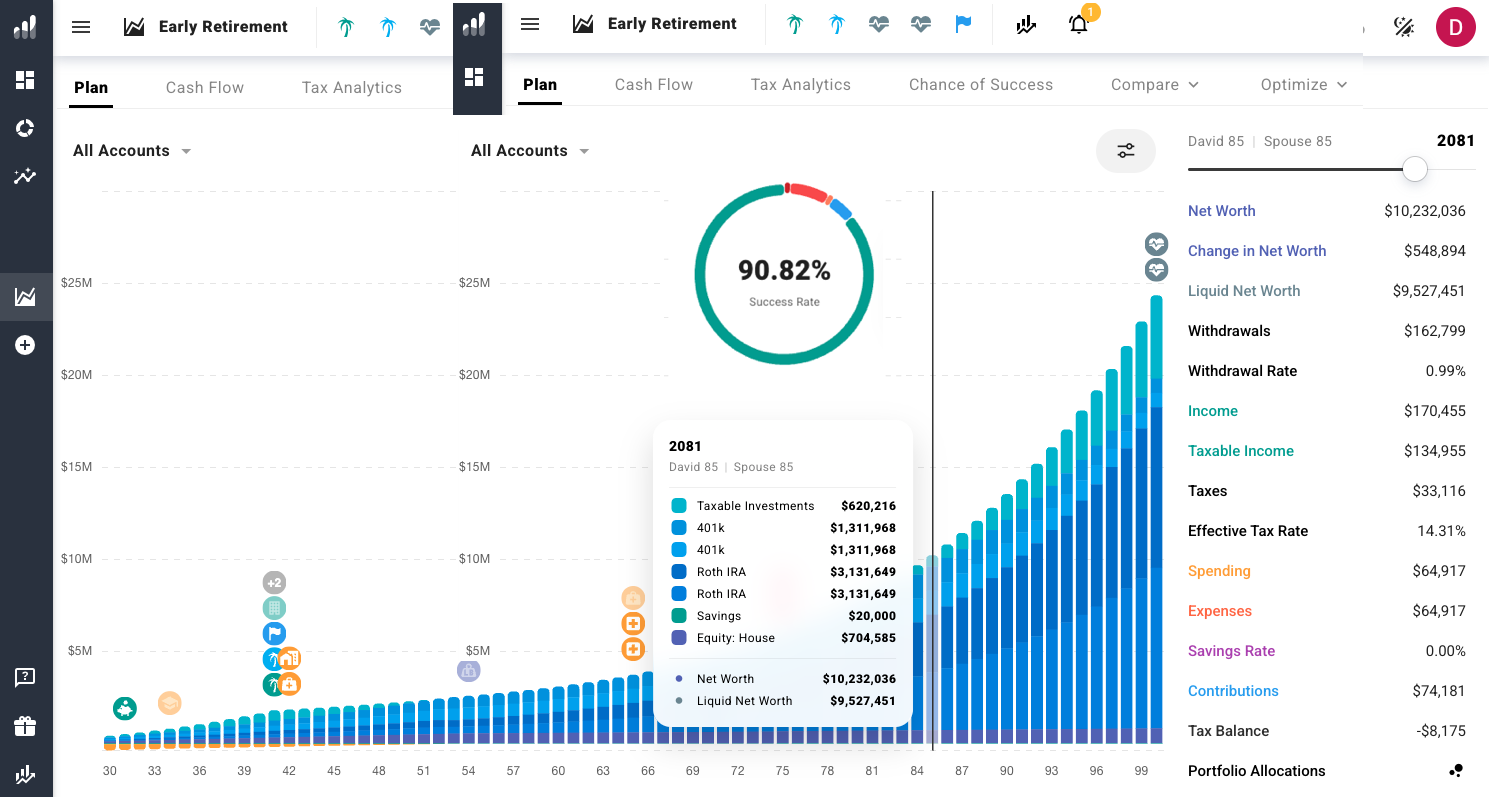
👉 See how living abroad affects your portfolio’s survival rate: our ProjectionLab walkthrough
👉 The banking side of two-country living: why seasonal movers can skip the foreign bank entirely—and the simple setup to use instead
👉 For the complete framework on retiring abroad—destinations, taxes, timelines, and strategies—see our complete guide to geographic arbitrage and retiring abroad
👉 Try out our Retirement Relocation Tool (PC tool) to shortlist the best retirement locations based on your individual preferences
👉 Use our free FI Calculator(email unlock) to see how to reach early retirement
👉 Browse 130+ articles on FI, investing, work, and health at The Good Life Journey
👉 Subscribe for weekly insights on FI, travel, and living well—one-click unsubscribe
🌿 Thanks for reading The Good Life Journey. I share weekly insights on personal finance, financial independence (FIRE), and long-term investing — with work, health, and philosophy explored through the FI lens.
Disclaimers: I’m not a financial adviser, and this is not financial advice. The posts on this website are for informational purposes only; please consult a qualified adviser for personalized advice.
Check out other recent articles





























About the author:
Written by David, a former academic scientist with a PhD and over a decade of experience in data analysis, modeling, and market-based financial systems, including work related to carbon markets. I apply a research-driven, evidence-based approach to personal finance and FIRE, focusing on long-term investing, retirement planning, and financial decision-making under uncertainty.
This site documents my own journey toward financial independence, with related topics like work, health, and philosophy explored through a financial independence lens, as they influence saving, investing, and retirement planning decisions.
Frequently Asked Questions (FAQs)
-
Seasonal geoarbitrage means splitting your year between different regions or countries to take advantage of lower costs, better climates, and varied lifestyles. Instead of relocating permanently, you rotate seasonally, keeping your roots while spending less.
-
Seasonal relocation is a long-term lifestyle design strategy where retirees divide the year between two or more countries. It balances affordability, health, and social connection—for example, summers in Germany and winters in Spain.
-
Our conservative case study shows potential savings of 15–25% annually by alternating between high- and low-cost regions.
-
Yes. It works best if you own your home or can sublet part of the year. Many European retirees already split time between northern and southern countries, enjoying lower costs without uprooting completely.
-
Following the sun means more outdoor activity, better mood, and longer healthy years. Living in milder climates can reduce seasonal depression, while language and cultural variety help maintain cognitive sharpness.
-
The main challenges include housing logistics, healthcare access, and travel fatigue. These can be managed with planning and by spending at least six months annually in your home country to simplify taxes and residency.
-
If your Financial Independence plan assumes living full-time in a higher-cost country, lowering expenses seasonally gives you built-in flexibility. Spending less during downturns helps preserve portfolio longevity, which is especially important in the first few years after retirement.
-
Not at all. Many people start seasonal living before full retirement through location-independent work. It’s compatible with partial retirement or slow travel lifestyles.
-
Popular routes include Germany–Spain–France, the UK–Portugal–Greece, or the Netherlands–Italy–Croatia. The ideal combination depends on family, climate preferences, and cost of living.
-
Theoretically, yes. By reducing your annual spending, it could lower the FI target. For instance, cutting costs by 15% can shrink a €1.5M goal to around €1.275M, bringing Financial Independence several years closer. In practice though, it may be safer to have to option of full retirement in the higher cost-of-living location.
Join readers from more than 100 countries, subscribe below!
Didn't Find What You Were After? Try Searching Here For Other Topics Or Articles: