
A refusal to bring in things to your home can come from both a mindset of frugality and cheapness—how can we tell them apart? Photo by Jonathan Borba on Pexels.
Reading time: 7 minutes
Quick answer — Frugal vs cheap: what's the difference?
Frugal means spending less while maximising value, joy, and quality of life. Cheap means minimising cost regardless of the consequences—to your health, relationships, or wellbeing. The difference is not financial but psychological: frugality is driven by values and autonomy, cheapness by fear and scarcity.
What you’ll get from this article
✔ Clear definitions—cheap vs frugal
✔ The psychology behind each mindset—fear vs autonomy & value
✔ Real examples across food, family, clutter, time freedom & more
✔ Practical decision frameworks (Wait-X-Days + Joy-Per-Dollar + Relationship Check)
✔ How cheapness harms quality of life—and how frugality expands it
✔ How to transition from cheap to frugal on your Financial Independence journey
Frugal vs Cheap: How to Spend Smart Without Sacrificing Joy
The Psychology of Smart Spending on Your FI Journey
After first discovering FIRE (Financial Independence, Retire Early), saving money can feel like a superpower. Often, people successfully internalize the existing tradeoff between your lifestyle costs and your timeline to reaching Financial Independence. There is no way around it—sorry to state the obvious but, all else equal, you will simply take longer to retire if your living expenses are higher than if they are lower.
But a superpower is only useful when we know what we’re aiming at. We rarely pause to ask ourselves a simple but grounding question: what exactly are we optimizing for—a retirement date and number (i.e., the crossover point of FI), or a rich life? A shorter FI timeline is desirable, yes—but not if we don't enjoy the decades it takes to get there and we look back with regret.
For many that decide to pursue FI aggressively, monthly budgets shrink, expenses fall, and there is an intoxicating thrill to see the Retire Early date moving closer (you can calculate this with our FI Calculator—free for email subscribers). Optimization feels like momentum, like you’re making progress towards your financial goals. But there is an important nuance that many on this journey forget—saving money isn’t the ultimate objective, enjoying a better life is the objective.
This article helps you recognize the line between healthy frugality and harmful cheapness—so you can accelerate your FI journey without sacrificing health, relationships, or joy in the process. In the following sections, you’ll find both a quick, clear definition of frugal vs cheap and a deeper exploration of mindset, psychology, practical examples (food, clutter, parenting, time, consumption), plus a framework to help with spending decisions.

During the optimization phase of FI, it can be intoxicating to see the fast progress and how cutting back expenses dramatically reduces your timeline to early retirement. Photo by Michał Parzuchowski on Unsplash.
Cheap vs Frugal: Definitions, Mindset & Psychology
Cheapness is often driven by fear—fear of running out of money, of wasting it, or doing it wrong. The focus is entirely in minimizing cost, even when that choice creates more stress and discomfort, or less joy. Cheap people skip activities they would enjoy, buy low-quality products that break sooner, or refuse necessary repairs because spending money feels like some failure to them.
This is especially frequent during Stage 3 of Financial Independence, when optimizing your timeline can become quite addictive—where saving money at all costs feels like progress, even if life begins to shrink. In this case, cheapness doesn’t serve FI, but undermines its whole point, which should be to live a better life.
Many of us reach this place of cheapness almost by accident. We started out being frugal in the Vicky Robin sense, yet after some time began to notice a shift towards cheapness. Recognizing it gently, without self-judgement can be enough to steer us back towards a more balanced saving approach. Many people—including myself—have passed through this phase as part of the learning curve. Yes, there is a tradeoff between spending and your FI timeline, but it’s important to get the balance right so that FI improves your life instead of compressing it.
In my own journey, after a certain point, I noticed that the more my portfolio grew, the less emotional sense it made for me to obsess over every dollar. At some point, the friction of cheapness simply outweighed any of the perceived benefits, and it took conscious reflection to realize I really was being too cheap. I had to then relearn how to spend more intentionally rather than simply avoid by default.
In contrast, frugality is rooted in clarity and autonomy, but it’s certainly not fear-driven. It asks: How can I get the most value from my money? Not the lowest spend, but the highest life return. Frugal people often cook at home not because they’re trying to cut corners at any cost, but because they truly enjoy the process, creativity, or health benefits that come attached to it.
Frugal people often buy second-hand out of respect for resources. They repair instead of replace—even if it takes longer—because it feels empowering. They appreciate learning new skills—aspire to become a generalist in life—and find it deeply satisfying. In this context, frugality expands your abilities—it certainly doesn’t shrink your life.
The most important distinction, I think, lies in the mindset. Cheapness reflects scarcity and is fear-based—a belief that resources are very limited and must be guarded tightly. In contrast, frugality stems from sovereignty, a confidence in your ability to choose intentionally, delay gratification, and to respect your own time, energy, and future.
Cheap is reactive, while frugal is proactive. If you’ve ever wondered how to know whether you’re being frugal or cheap, this mindset shift is the answer: frugality filters for value and considers different dimensions, while cheapness simply rejects cost. Cheapness can be a very blunt mental model—a single-rule system that defaults to no, regardless of context or consequence. It reduces decision-making to cost alone, even when it creates discomfort, missed opportunities, or unnecessary friction in life.
In contrast, frugality is a framework that acts as a filter rather than a wall. It doesn’t only ask about the price, but whether it is worthwhile. In doing so it separates wheat from chaff and allows through the purchases that bring health, time, joy, or connection, while gently discarding the rest. Where cheapness avoids, frugality selects.
This distinction isn’t only philosophical—apparently it shows up even in our cognition. Behavioral research suggests that a scarcity mindset narrows mental bandwidth, leading to poorer decisions and short-term thinking. It makes sense; when our primary internal rule becomes “avoid spending at all costs”, we lose the ability to evaluate tradeoffs clearly. Cheapness doesn’t just restrict money—but muddles overall perspective.
These differences become easiest to see in the everyday choices we make—especially around food, where the line between nourishment and deprivation can become surprisingly thin.

While cheapness is a simple mental model that says “no” based on cost, frugality is a more nuanced mental framework that considers time, value, joy, health, and connection. Photo by Maria Teneva on Unsplash.
Frugal vs Cheap in Food Choices: Nourishment vs Restriction
Cheap eating often prioritizes calories per dollar over nourishment, variety, or enjoyment. It’s when someone only buys the simplest or cheapest staples—rice, pasta, low-quality processed food—not because they enjoy them but because spending more doesn’t feel right. It’s like going back to being a student, except now you’re in your 30s or 40s, and your needs and standards have evolved.
Over time, meals become something functional, bland, and joyless. Your body is operating on lower-quality fuel, and so your mind may start echoing that same scarcity. You might be saving money, but the trade is clear in energy and health.
Frugal cooking creates an entirely different dynamic—meals remain inexpensive, yet are joyful and skill-building. You know you’re already saving food by simply not eating out so often, so you are more likely to build healthy meals you actually enjoy, without looking so much at the price tag in the supermarket.
You taste the reward that goes into the effort, not merely the avoided expense. You appreciate the work, creativity, and nourishment that went into it. I find that many people who eat out daily lose that sensitivity—as restaurant food becomes the default, meals can blur together, and they’re not really enjoying the food anymore. Instead of truly enjoying the meal in front of them, they may find themselves comparing it to the one they had last week at some other place.
The real difference between frugal and cheap is not the price paid, but the life return. Cheap food restricts—in nutrients, variety, and pleasure. In contrast, frugal food enriches, it nourishes to body, engages the senses, and rewards effort with satisfaction. When you cook with intention and creativity, you’re not only saving money, you’re building skill, strengthening health, and savouring meals instead of just consuming them.
The question is not how little can I spend but how fully can I live while spending wisely.
Cheap vs Frugal in Family Life, Gifts & Social Connection
Cheapness often damages relationships. You stop joining friends for coffee or you skip birthday dinners. You avoid social moments that require small spending. Over time, you withdraw not because you lack desire for connections, but because spending feels dangerous. Cheap living can inadvertently shrink your social world, something you’ll surely regret in old age.
Frugality builds connection instead of avoiding it. Instead of declining plans, you decide to redesign them. You become known as someone who invites friends over instead of going out. Or you suggest going for morning walks, a game night, or a shared potluck. You recognize that in the end what’s important is time spent together, not the price tag of the activity.
With children, frugality may mean fewer but more meaningful gifts—one or two good presents instead of 10 plastic toys they will forget about. It means building forts together, reading stories, and baking together. In the end, children remember togetherness, not the amount of presents they got at Christmas.
Frugality also acknowledges the other costs to clutter. For example, an experimental study directly linked cluttered, chaotic home environments to increased physiological stress responses. Visual clutter increases cortisol, impairs focus, and reduces creativity. I experienced this first hand recently. We did a deep reorganization of our son’s room, and by the end of it, you could finally see every single surface free of clutter. Our son loved it. The room even sounded different. The surprising thing was, once the room was decluttered, he sat down by himself and started drawing for a long time.
It made us realize what should have been obvious: that the things in the room weren’t the source of creativity—the space was. Nothing new was added, only the excess was removed. Sometimes, the most supportive environments for creativity are simply the least cluttered ones.
Space is not absence of things, but potential. It’s true that cheap minimalism can also lead to fewer possessions, but for the wrong reasons and mindset—through avoidance, guilt, or fear of spending. Frugal minimalism is intentional: it chooses less so that more life can fit. And in this context, a frugal mindset and a decluttered space sparks creativity.
A room with fewer toys because the family intentionally values openness and calm is not the same as a room with fewer toys because nothing feels worth buying. One expands potential, while the other one restricts it.
And nowhere is the difference between cheapness and frugality more visible than in how we spend our most finite resource—time.

A cheap mindset says no to spending and eating out. A frugal mindset understands the importance of social connections, eats out occasionally, and prioritizes organizing get-togethers at home. Photo by Considerate Agency on Unsplash.
Time vs Money: How Frugality Buys Freedom (Cheapness Doesn’t)
Frugality is grounded in the recognition that money represents life.Echoing the famous principles from Vicky Robin’s Your Money or Your Life, every dollar is time spent working—energy exchanged, stress absorbed, and emotional bandwidth consumed. This understanding forces a deeper evaluation of spending, from “Can I afford it financially?” to “Can I afford it with my time?”
Cheapness ignores value and always cuts costs, while frugality respects life-energy. There are moments when the purchase is well-worth the time spent in the office earning it. You may save $50 by skipping a meaningful event, but if that moment would have become a cherished memory—was it really worth it?
I like to remind myself of Bill Perkins philosophical approach from Die With Zero:our business in life is all about the accumulation of memories. That’s already a pretty good mental model—will this expense provide me with a memorable moment or will it become some unused gadget sitting somewhere for years?
Repairing and reusing also embody the frugal mindset. Fixing a bike isn’t about being stingy, but about developing new skills, competence, and self-reliance. Mending pants teaches skill; sharpening a knife extends its utility; buying second-hand honors the embedded energy and resources that went into creating the product—mining, manufacturing, and shipping across the world.
Frugality sees the object not as disposable but as part of a longer life cycle. It’s not about depravation, but about becoming better stewards of our stuff. Cheapness focuses on price, while frugality focuses on respect for resources and expanding capability.
A powerful insight from FI is that reducing expenses can shorten the required years of work. Or that when your lifestyle costs less, you don’t need a huge salary or a stressful and consuming career. You may choose to work four days instead of five, take more time with your children, or pursue creative projects that don’t maximize income. For many, this shift also breaks the cycle of staying in unfulfilling roles with so many people today quiet quitting.
If we wanted to race to Financial Independence in our full-time jobs, we could reach FI in 4 years, perhaps earlier with a workaholism focus or side hustles. This would mean retiring in our late 30s and early 40s. But at what cost? We have little ones at home who will only be this cute once.
Instead, we’ve consciously chosen to both work part-time and in less stressful careers. We don’t need to wait for formal FI; we’re already reaping its benefits now—in the form of longer afternoons and more time spent with our kids.
In a world obsessed with consumption-based signaling, this is radical freedom. As Morgan Housel puts it: wealth is what you don’t see—it’s not the gadgets displayed, but the time you own, the stress you eliminate, and the choices you reclaim.
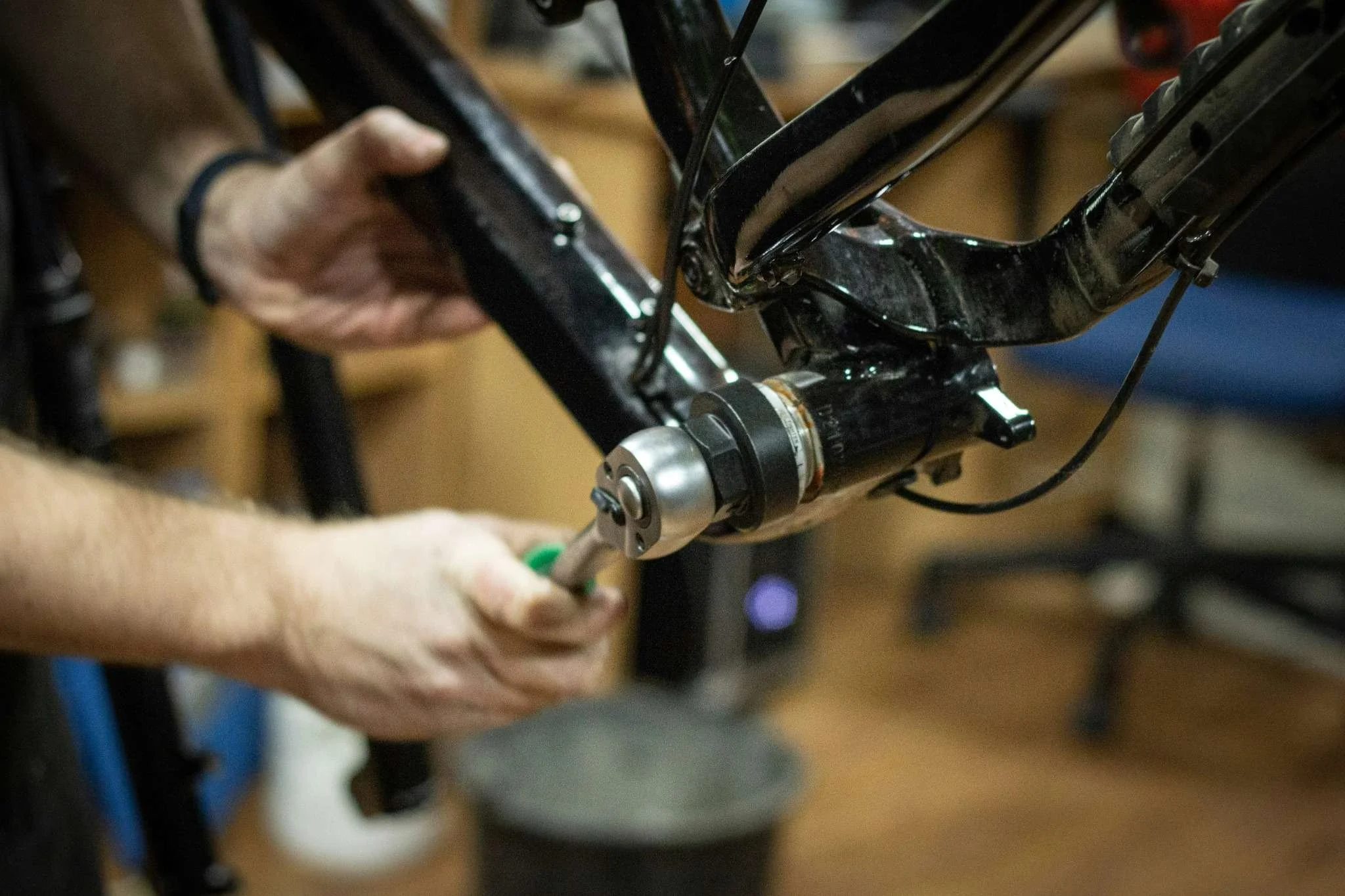
A frugal mindset accepts the challenge of learning to fix things rather than always outsourcing problems to others. Photo by Bohdan Kadun on Unsplash.
How to Be Frugal (Not Cheap): Framework + Decision Filters
A practice I return to now and then is the “Wait-X-Days” Rule, which allows you to retrain your impulse and regain some sovereignty over short-lived desires. Delaying a purchase, even briefly, has a way of revealing the difference between a passing urge—a thought that randomly popped in our head—and something that will genuinely add value in our lives. Most desires soften when given time, and the ones that don’t often prove themselves worth keeping.
Many use a 30-day rule, but you can experiment around with the time-frame that makes sense for you. Write down what you want, then wait for that period of time and see what happens.
Once the period is up, I often find myself staring at the paper (or screen) wondering why on earth did I want that in the past. I’d either completely forgotten about it, didn’t fully understand the purpose it would serve, or understood it was really not that necessary in the end. Most wants fade because they were triggered by emotions, marketing, algorithmic suggestions, or comparisons.
Over time I noticed how often that pause protected not just my wallet, but my attention—and how it quietly revealed the difference between a passing urge and something that truly mattered. A cheap mindset might avoid the purchase purely on cost, while a frugality mindset determines whether value remains once the emotions pass.
The Joy-Per-Dollar test goes a step further and echoes the philosophy espoused by Vicky Robin. Does this purchase produce joy, growth, health, relationship, time, or meaning? If yes, then the cost may be less relevant. If no, then even a low price is expensive in different dimensions because it occupies space, attention, and life-energy.
The key is to think in terms of value density, not just price. A $500 bicycle used daily is infinitely more valuable than 50 $10 things that ultimately become house clutter. Bronnie Ware’s famous insights on the regrets of the dying shows people don’t regret the things they didn’t buy, but the time not spent with loved ones, experiences not lived, and courage not taken.
Relationship Check can act as a complementary compass. Does this choice strengthen connection or increase isolation? Cheapness tends to isolate, it says no out of fear. It refuses generosity. In contrast, frugality can strengthen connection through intentionality—fewer, deeper gatherings, shared meals, or time spent outdoors with others.
One final practical tool I like to consider is the 0.01% rule. Divide your net worth by 10,000—anything below that number simply isn't worth mental energy for occasional, one-off purchases. Just buy it and move on.
If a spending decision creates shame, anxiety, or resentment, it’s very likely not a wise one. Pursuing Financial Independence should not be about spending as little as possible, but about crafting a life rich in meaning, not stuff. Money saved for its own sake and without joy is just hoarding. Money saved that expands freedom and connection is transformation.
Frugality isn’t the art of spending less—but the art of needing less and enjoying more. It’s a philosophy of respect: for resources, your health, your relationships, and your time on earth. Cheapness shrinks life to save money, while frugality expands life while spending wisely.
In a culture built on consumption-based status and endless upgrades, choosing frugality is an act of rebellion—and of clarity. As Housel reminds us, wealth is what you don’t see—the space, peace of mind, and time you recover by refusing to consume mindlessly.
💬 Where do you see yourself on the frugal–cheap spectrum right now? Which of your current spending habits expand your life rather than shrink it? Please share with us in the comments below.
If you enjoyed this article, here are some next steps:
👉 New to FI? Start with our complete guide to Financial Independence
👉 Use our free FI Calculator to estimate your early retirement timeline (email unlock)
👉 Browse 130+ articles on FI, investing, and work at The Good Life Journey
👉 Subscribe for weekly insights—one-click unsubscribe
🌿 Thanks for reading The Good Life Journey. I share weekly insights on personal finance, financial independence (FIRE), and long-term investing — with work, health, and philosophy explored through the FI lens.
Disclaimer: I’m not a financial adviser, and this is not financial advice. The posts on this website are for informational purposes only; please consult a qualified adviser for personalized advice.
Check out other recent articles




























About the author:
Written by David, a former academic scientist with a PhD and over a decade of experience in data analysis, modeling, and market-based financial systems, including work related to carbon markets. I apply a research-driven, evidence-based approach to personal finance and FIRE, focusing on long-term investing, retirement planning, and financial decision-making under uncertainty.
This site documents my own journey toward financial independence, with related topics like work, health, and philosophy explored through a financial independence lens, as they influence saving, investing, and retirement planning decisions.
Frequently Asked Questions (FAQs)
-
Frugal means seeking value, quality of life and long-term benefit from spending decisions. Cheap means reducing spend even when it harms health, connection, or daily life. Frugality selects intentionally; cheapness avoids reflexively. One expands life, the other restricts it.
-
Ask whether saving enhances or reduces wellbeing. If spending less protects health, time, calm or relationships, it's frugality. If saying no creates stress, deprivation or resentment, it's cheapness. The emotional outcome reveals the truth.
-
Cheapness often comes from fear—fear of running out, of making mistakes, or of losing control. Behavioral research shows scarcity narrows cognitive bandwidth and encourages short-term decisions. Cheapness is self-protection that can shrink life unintentionally.
-
Usually, yes. Frugality increases agency and reduces financial stress without limiting joy. Cheapness reduces spending at the cost of experience, connection or nutrition. Long-term wellbeing correlates more with intentional spending than minimal spending.
-
No—stinginess withholds generosity even when one can afford it. Frugality is conscious resource stewardship; stinginess is emotional hoarding. A frugal person can be generous when it matters, a stingy person struggles even when giving creates value.
-
Yes. Frugality doesn't forbid spending—it prioritizes meaning and return. A frugal person may skip daily takeout to enjoy an occasional Michelin-level meal deeply. Luxury with intention is frugality, not excess.
-
Start with small intentional yeses that create connection or joy. Spend where value exceeds cost: quality tools, health, memories, relationships. Build comfort slowly—a life well-lived requires selective generosity.
-
Use filters, not blanket restrictions. Delay purchases, calculate joy-per-dollar, buy second-hand, repair instead of replace, choose experiences over accumulation. Frugality preserves quality of life while lowering cost.
-
Clarity, patience, and value-based decision making. A frugal person understands money equals life energy, and spending intentionally preserves freedom. They seek maximum life return—not minimum spending.
-
Frugal, always. Cheapness lowers spend but also shrinks experience. Frugality reduces expense while increasing wellbeing, freedom, and time. One saves money—one saves life.
Join readers from more than 100 countries, subscribe below!
Didn't Find What You Were After? Try Searching Here For Other Topics Or Articles:

<script>
  ezstandalone.cmd.push(function() {
      ezstandalone.showAds(102,109,110,111,112,113,114,115,119,120,122,124,125,126,103);
  });
</script>