How to Read ETF Names: What UCITS, Acc, Dist, Hedged and Synthetic Actually Mean for European Investors
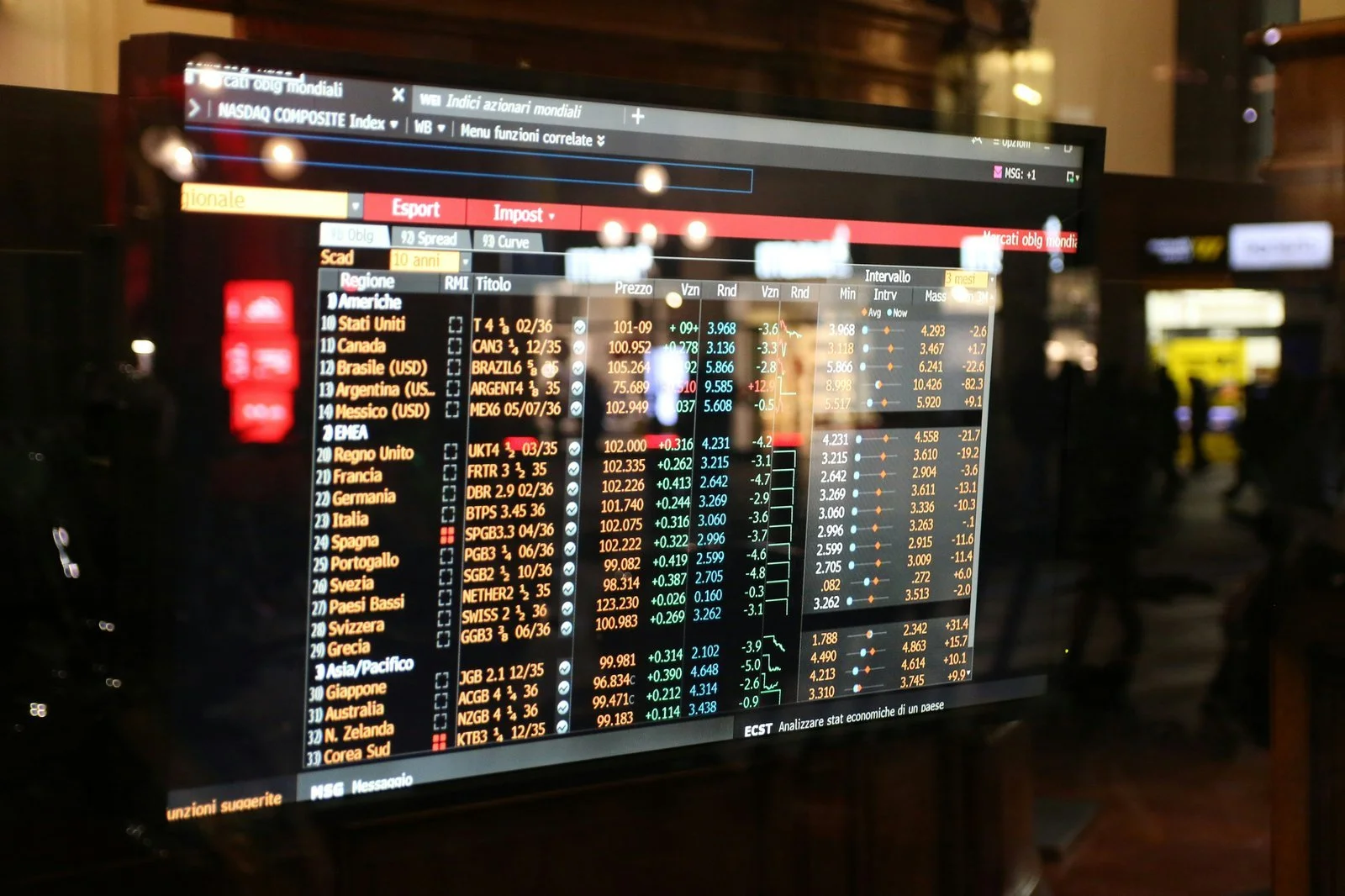
Investing can look intimidatingly complex—especially when you're staring at a screen full of abbreviations and financial jargon you've never seen before. Photo by Daniel Brzdęk on Unsplash.
Reading time: 8 minutes
Quick answer:
An ETF name is a compressed description of what the fund is and how it works. Reading from left to right: the first word is the provider (iShares, Vanguard, Xtrackers); then comes the index it tracks (e.g., MSCI World, S&P 500, FTSE All-World); then the regulatory wrapper (UCITS); then any special characteristics (Swap, EUR Hedged, Daily 2x); and finally the share class (Acc or Dist). Once you know what each element means, most ETF names become straightforward to read. If it still isn't, then it's likely a product worth questioning before you invest.
Note: this guide is written primarily for investors based in Europe or other non-US markets. US investors typically access equivalent strategies through index mutual funds and won't encounter most of the terminology covered here.
What you'll get from this article
✔ What UCITS means and why it's non-negotiable for EU investors
✔ Why Ireland-domiciled funds are cheaper to hold than Luxembourg ones
✔ The difference between Acc and Dist—and which is usually better for FIRE
✔ When currency hedging helps and when it just adds cost
✔ Why non-US investors end up buying ETFs rather than index funds—and why it matters
✔ Six real ETF names decoded from first word to last—including two traps to avoid
TL;DR — ETF Names Decoded
📋 Most ETF names follow a simple structure: Provider → Index → Regulation → Share Class
🏦 Provider first—iShares (Blackrock), Vanguard, Xtrackers, Amundi tell you who runs the fund
📊 Index is the most important element—it defines what you actually own inside the product
✅ UCITS = non-negotiable for EU investors. It's a green light, not a complication
💰 Acc beats Dist in most countries during the accumulation phase of Financial Independence
🔁 Swap = synthetic replication. Not wrong, but worth understanding risks before buying
📐 Hedged variants add 0.1–0.3% cost annually—rarely worth it for long-horizon investors
⚠️ "Research Enhanced," "Factor," "Smart Beta" in the name = active bets, not passive investing
🇮🇪 ISIN starts with IE? Good for EU investors. Irish domicile means lower dividend withholding tax on US stocks
When the Name Looks Like Nonsense But the Decision Is Real
Many would-be investors are excited to get started on their investing journey. They understand why passive investing beats active, the importance of fees compounding against them over decades, and why globally-diversified index funds (or ETF that track them) are the best foundation for a long-term FIRE (Financial Independence, Retire Early) portfolio.
But then they open their broker account, type something like "MSCI World ETF" (or "S&P 500 ETF," "FTSE All-World ETF," or any other broad index), and the results return dozens of different funds, all with very complicated-sounding names. Imagine 30 different options, all looking something like this:
iShares Core MSCI World UCITS ETF USD (Acc)
Xtrackers MSCI World Swap UCITS ETF 1C
Amundi MSCI World UCITS ETF – EUR Hedged Daily Acc
It's easy to see why many give up before they even start. Do all these products do the same? Why do they have so many different symbols? How can I be sure I am buying the right one?
I remember the first time I looked at a list of ETFs on my bank’s platform. I thought to myself “Oh no, you must be joking,” and felt genuinely frustrated. I had spent weeks reading about passive investing, index funds, and the importance of low fees. I felt ready to take the plunge and buy my first ETF shares—and there I was, paralysed, staring at thirty variations of what was supposedly the same fund.
This article is here to make those names legible—a plain-language guide through every element of those names so you can choose with confidence rather than just picking one and hoping for the best.
Where relevant, we'll also flag what these choices mean specifically for FIRE investors who are looking to retire early. And we’ll finish by providing six real fund examples, decoded from start to finish. By the end of this article, those names should feel considerably less intimidating.
More data than you'll ever need. Less guidance on what any of it actually means. Photo by Daniil Komov on Unsplash.
Index Funds, ETFs, and Why European Investors End Up Here
But first—a brief note on audience. This article is written for investors based in Europe and other non-US markets. If you're investing from the US, you likely access the same passive strategy through low-cost index mutual funds from Vanguard, Fidelity, or Schwab, and most of the terminology here won't apply to your situation. For everyone else, read on.
The distinction is more structural than philosophical. Both instruments track the exact underlying index—say, the MSCI World or the S&P 500—and deliver virtually identical long-run returns. The difference lies in how they are packaged and sold. A traditional index mutual fund is priced only once a day and bought directly from the fund provider.
In contrast, an ETF trades on a stock exchange throughout the day in the same way that shares do, with its own ticker and bid-ask spread. For a long-term FIRE investor who holds the investment for several years and doesn’t trade intraday, this mechanical difference is almost irrelevant.
What is relevant is why European investors can’t easily access the low-cost Vanguard mutual funds many US investors use. The answer is regulatory: EU rules require that any fund sold to retail investors in Europe comes with a “Key Information Document (KID).” US-domiciled mutual funds from Vanguards or Fidelity don’t produce these documents for their funds, meaning most European brokers can’t legally offer them.
ETFs structured under the UCITS framework in Ireland or Luxembourg do produce KIDs, which is why, if you’re investing from Europe, ETFs are your access point to the same passive strategy.
The ETF Universe Is Vast — and Mostly Irrelevant to You
Before going further, it’s worth saying something about the incredible scale of the ETF universe, because it tends to make the decision to select one harder than it should be. JustETF, one of the main databases for European investors, lists over 2,200 different indices tracked by ETFs available in Europe.
Yes, that number is genuinely alarming until you realize that the majority of those funds have nothing to do with a conventional passive FI/FIRE strategy. You can buy thematic ETFs tracking water infrastructure, Israeli technology companies, global robotics, US cannabis producers, and so much more. As you imagine with these examples, many can be very volatile indices, and, unlike broad-market international indices, it’s far from guaranteed that they have an upward trajectory.
The reason these products exist is because the barrier to creating a new index is very low, because niche products tend to command higher management fees, and, frankly, because financial media has an appetite for novelty.
But the reality is simpler than it looks: for an investor in the accumulation phase of FI, you are looking for a small number of broad, market-cap weighted equity ETFs at the lowest possible cost. In plain English: funds that own a little bit of everything, weighted by company size, as cheaply as possible.
Everything else—all thematic funds and niche indices—is just a form of active investing, a way of placing bets on small number of companies or certain sectors outperforming the average stock market return. In many cases, it’s active investing wrapped up in passive language.
It’s also worth considering that ETFs don’t necessarily only hold stocks. You can get ETFs that hold government bonds, corporate bonds, real estate investment trusts (REITs), commodities, and more.
There are also two related instruments that look like ETFs but have different legal structures: ETCs (Exchange Traded Commodities), which are backed by physical assets or collateral and typically used for gold and other commodities, and ETNs (Exchange Traded Notes), which are unsecured debt of the issuing bank and carry meaningful counterparty risk—if the issuer fails, you could lose your investment.
A true UCITS ETF has a different legal structure that protects investors if the fund manager fails. For this article, we're focused on equity ETFs (i.e., stocks), which are the growth engine of a FIRE portfolio during accumulation.

Imagine you just wanted orange juice and found 15 brands to choose from. The ETF universe feels exactly like this. Photo by Raymond Yeung on Unsplash.
Provider, Fund Range, and the Index — What You're Actually Buying
The very first words of an ETF name almost always identify the provider—the asset management company that created the fund, maintains it, and charges you a fee to run it. The major providers for European FIRE investors are iShares (owned by BlackRock, the world's largest asset manager), Vanguard, Xtrackers (run by DWS, part of Deutsche Bank), Amundi (Europe's largest asset manager), SPDR (State Street), and Invesco.
The size of the provider matters in practice. Large, well-established providers with significant assets under management in a specific fund are less likely to close or merge the fund, which creates unwanted taxable events. As a rule, a fund with over €500 million in assets is generally considered large enough to be stable; this threshold is widely used by ETF analysts and databases like JustETF as a practical stability benchmark—below it, fund closures become more common.
To put this in perspective: if you hold €1 million in a fund that gets wound down, and your jurisdiction treats the liquidation as a sale, you could face a capital gains tax bill running into six figures—an event entirely outside your control and at a moment of someone else's choosing. For a FIRE investor, that kind of forced realization event could push their early retirement timeline back. So, going with larger providers and funds tends to mitigate this risk.
Within each provider, there can also be a sub-label. For instance, iShares’ “Core” signals their flagship low-cost products—the ones most likely to be relevant to a cost-conscious FIRE investor. But when you see other labels like “Smart Beta,” “Factor,” “Quality,” or a specific theme name like “iShares Automation & Robotics”, you know you’re moving away from plain-vanilla passive investing into products that make active bets.
After the provider name comes the index—the single most important element of the entire name, and where most ETF selection mistakes happen. It defines what the fund actually holds: the list of securities it tracks, its geographic coverage, market cap range, and methodology.
For instance, MSCI World covers approximately 1,300 large and mid-cap companies across 23 developed countries—the US making up roughly 70% of it. MSCI ACWI builds on that and extends it to cover also 24 Emerging Markets countries like China, India, Taiwan, or Brazil, covering around 2,500 companies in total. FTSE All-World is similar to ACWI with slightly different country classifications and a few methodological differences; the practical long-run performance difference between the two is minor. The S&P 500 is the 500 largest US companies only.
When 'Index' in the Name Doesn't Mean Passive
At this point, it’s worth reiterating the warning that not everything with the word “index” in its name is passive investing in the meaningful sense. Consider:
JPMorgan Global Emerging Markets Research Enhanced Index Equity (ESG) UCITS ETF
Even though it contains the word “index,” has ESG credentials (environmental, social, and governance), and the UCITS regulation label, this fund is actively managed. The tell is in the wording “Research Enhanced:” it means JPMorgan's analysts are making decisions about which stocks to overweight or underweight relative to the benchmark based on their own research.
It results in a fund that resembles a passive product from the outside, but is making active bets inside, and charging you for it. Despite charging 0.33%—roughly 3 times more than needed—it underperformed its index during the last 3 and 5-year periods. So much for their “enhanced research.”
Other similar tells to be careful with include "Factor," "Momentum," "Quality," "Low Volatility," "Smart Beta," "ESG Leaders," "Climate Transition Benchmark," or "Enhanced." None of these necessarily make a fund bad, but they make it different than what you were trying to select—narrower, more opinionated, and usually more expensive than a plain broad-market tracker.
A simple test I usually consider is to ask whether the index name contains any qualifier beyond geography and market size. If so, someone is likely making an active decision about what to include, and you should at least be aware of what that is before buying.
With the provider and index understood, the next layer of the name covers the regulatory and structural terms—the ones that look most intimidating but actually are quite straightforward.

Dublin is the capital of European ETF investing—a tax treaty and a regulatory framework made it so. Photo by Alexandra Mitache on Unsplash.
UCITS, Domicile, and Replication — the Technical Layer That Has Real Consequences
UCITS, which stands for Undertakings for Collective Investment in Transferable Securities, is the main European regulatory framework for investment funds that sets minimum standards for fund governance, diversification, liquidity, and investor protection.
For investors based in the EU or UK, the presence of UCITS in an ETF name is a minimum requirement, not an optional feature. There are two reasons for this. First, as mentioned earlier, EU brokers are required to provide extra information (KID) for any fund they sell to retail investors.
And second, the protection question: UCITS rules cap individual holding concentration, require minimum liquidity standards, and establish a clear regulatory framework for what happens to investors' assets if the fund manager fails—with EU regulatory oversight of the process.
Your assets are held separately from the manager's own balance sheet either way, but UCITS formalises and enforces that separation under European law, giving you a clearer path to recovery and a regulator to hold accountable if something goes wrong. Either way, if you're investing from Europe, UCITS in the name is a green light, not a complication to be worried about.
The country where a fund is domiciled doesn't usually appear in the ETF name, but it's easy to find: the first two letters of the fund's ISIN code tell you immediately—e.g., IE for Ireland, LU for Luxembourg. On any broker platform or ETF database, the ISIN is always displayed alongside the fund name as a unique identifier. Why is it important to double check where the fund is based?
Ireland-domiciled ETFs benefit from a bilateral tax treaty between Ireland and the US that reduces withholding tax on US dividend income from 30% to 15%. Luxembourg doesn't have an equivalent treaty at the fund level, which means Irish domicile typically delivers better after-tax dividend returns for funds holding US stocks. This tax treaty advantage is one reason Ireland captures 78% of European ETF assets by AUM, according to Irish Funds industry data.
This is not a minor detail, since US companies make up around 70% of most MSCI World funds. The dividend withholding tax treatment on that portion of the fund is meaningful when compounded over decades, and is the primary reason why the vast majority of UCITS ETFs that European FIRE investors use are Irish-domiciled.
The replication method describes how the fund tracks its index. Sometimes it appears explicitly in the name—for instance, the label “Swap” in an Xtrackers fund name signals synthetic replication. More often it doesn't appear in the name at all and you need to check the fund factsheet or a database like JustETF, where replication method is always listed in the fund details.
Physical replication means the fund actually buys the underlying shares in the index—either all of them (full replication, common for the S&P 500) or a representative sample (optimised sampling, common for very large indices like MSCI World where buying every stock would be costly).
In contrast, synthetic replication uses derivative contracts—usually a swap agreement with a counterparty bank—to replicate the index return without holding the actual shares. Synthetic funds often have slightly lower tracking error (i.e., they better track the index in question) and can be more tax-efficient in certain jurisdictions, but they introduce counterparty risk: if the bank on the other side of the swap fails, the fund may not fully deliver the index return.
For most long-term FIRE investors, physical replication is simpler, more transparent, and sufficient. Synthetic isn't wrong, but it's worth knowing what you own.

The whole point of choosing Acc over Dist: dividends reinvested automatically, compounding your portfolio in the background. Photo by Kamil on Unsplash.
Acc, Dist, Hedged, Leveraged — and the Other Labels Worth Knowing
Accumulating (Acc) and distributing (Dist) describe what the fund does with the dividends it receives from the companies it holds. An “Acc” fund automatically reinvests those dividends back into the fund, growing the net asset value over time without sending any cash dividends to you.
In contrast, a “Dist” fund pays those dividends out as a cash distribution to your brokerage account on a regular schedule—normally on a quarterly basis. For most investors on the accumulation side of a FIRE journey, Acc is the cleaner and generally more efficient choice: dividends compound automatically without any action on your part, and in most countries, you only pay tax when you sell—a form of tax-efficient compounding that adds up over a long accumulation horizon.
However, this advantage isn't universal. Some countries apply “distribution” rules that tax the income accrued inside an Acc fund annually, even though no cash was actually paid out—Germany, where I live, and Denmark or Austria are notable examples. Germany applies a deemed distribution rule (“Vorabpauschale”) that taxes a portion of accrued gains annually, though the amount is typically modest and the bulk of tax is still deferred until sale. This means that investing in Acc funds remains generally preferable here too, just with a smaller advantage than in jurisdictions without such rules.
Currency hedging—appearing usually like "EUR Hedged," "GBP Hedged," or similar in a fund name—means the fund uses derivative contracts to neutralize the impact of exchange rate movements between the fund's base currency and the investor's home currency. The appeal is intuitive: if you're a European investor holding a UCITS ETF that tracks the S&P 500, your underlying exposure is still to USD-denominated assets. Therefore, a strengthening dollar boosts your returns in euro terms, but a weakening dollar hurts them, independently of what US stocks actually did.
The problem with adding hedging is that it adds additional cost—typically 0.1% to 0.3% per year for equity ETFs, driven by the interest rate differential between the two currencies. When US rates are meaningfully higher than eurozone rates, as they have been in recent years, that cost is at the higher end of the range.
Over long time horizons, the evidence also suggests hedging adds limited value, since currency movements in equity markets tend to wash out over decades; the volatility you're paying to hedge tends to be short-term noise rather than long-run structural risk.
For FIRE investors with horizons measured in decades, an unhedged global ETF is almost always the right default. Currency hedging on equity ETFs rarely earns its cost over long accumulation periods—and switching from an unhedged to a hedged position near retirement would typically trigger a taxable event while solving the wrong problem. Sequence-of-returns risk is what actually threatens an early retirement portfolio, not short-term currency movements.
Several other labels appear in ETF names regularly enough to be worth mentioning. Leveraged ETFs—labelled "Daily (2x)," "Daily (3x)," or similar—use derivatives to multiply daily index returns. For instance, the “Amundi Nasdaq-100 Daily (2x) Leveraged UCITS ETF Acc.” Leveraged ETFs are designed for short-term traders, not decade-long holders like those on a FIRE journey.
Because leverage resets daily, a fund that rises 10% and then falls 10% on consecutive days doesn't end up flat—it ends up below where it started, and this drag compounds over time in a way that makes them reliably unsuitable for long-term holding regardless of how you feel about the underlying index.
ESG, SRI (Socially Responsible Investing), and CTB (Climate Transition Benchmark) labels indicate sustainability screening of various kinds; we explore the pros and cons of ESG investing in detail in a dedicated piece, but the key point here is that they represent active decisions about what to include and exclude, usually with a slightly higher fee and a portfolio that differs from the broad market.
Finally, small-cap, mid-cap, and large-cap labels describe the size segment of companies targeted—MSCI World and FTSE All-World are predominantly large and mid-cap by default, so dedicated small-cap ETFs are additive exposure rather than alternatives. ESG labels and size segments don't change the fundamental decision—they just require you to know what they mean before buying. Leveraged ETFs are very different, and belong in a different conversation entirely.

Leveraged ETFs offer twice the ride—in both directions. Not the vehicle for a decade-long FIRE journey. Photo by Etienne Girardet on Unsplash.
Six Real Fund Names, Decoded
There is no universally correct ETF for a FIRE portfolio—the right choice depends on your jurisdiction, tax situation, timeline, and other factors. But the wrong ones are usually identifiable from the name alone, once you know what to look for.
Here are six real fund names—decoded from first term to last, including a couple of traps to be aware of:
iShares Core MSCI World UCITS ETF USD (Acc). The provider is iShares (BlackRock); Core means it’s part of their flagship low-cost line; the index is MSCI World, so it approximately covers 1,300 large and mid-cap companies across 23 developed markets, US-heavy; regulatory-wise, it’s UCITS-compliant, available to EU investors; its base currency is USD—the fund prices in dollars, though you buy in your local currency through your broker (in other words, it’s unhedged); distribution: Acc—dividends are reinvested automatically. This is about as close to a "vanilla FIRE ETF" as exists for European investors: broad, relatively cheap (total expense ratio or TER of 0.20%), accumulating, UCITS, from one of the largest and most stable providers in the world.
Xtrackers MSCI World Swap UCITS ETF 1C. This fund tracks the same MSCI World index as the iShares above, with the same UCITS wrapper, and the same accumulating dividend policy (1C = first share class, accumulating). The difference is “Swap”—this fund is synthetically replicated using a swap contract rather than holding the actual shares. It tracks the exact same index with the same objective, but the structure is different and worth knowing. This is a Luxembourg-based ETF with a 0.45% TER, so it’s less tax efficient and substantially more expensive than the previous one. Xtrackers also has one with physical replication based in Ireland with only a 0.12% TER. The bottom line is that, if you weren’t careful, you could end up with something 4 times more expensive from the same provider.
iShares S&P 500 EUR Hedged UCITS ETF (Acc). This is a perfectly well-built product from a trusted provider that tracks the S&P 500, but the EUR Hedged element adds an ongoing cost for currency protection that most FIRE investors in the accumulation phase don't actually need. Its TER is 0.20% versus 0.07% without the hedging. Many FIRE folks are adamant about owning the S&P 500, but we should consider that this solution is less diversified than owning a global ETF. Nobody knows what the world will look like 20 years from now.
iShares MSCI USA ESG Enhanced CTB UCITS ETF USD (Dist). Provider: iShares; index: MSCI USA—US companies only, not global; qualifier: ESG Enhanced and CTB mean the fund applies sustainability screening and aligns to EU Climate Transition Benchmark standards, making active decisions about inclusion and weighting; UCITS compliant: yes; distribution: Dist—dividends paid out in cash, not reinvested. There are two things to flag here for a FIRE investor. First, this is US-only—not a global fund, so it represents a significant geographic concentration if used as a core holding. Second, the Dist structure means dividends arrive as cash in your account and create a taxable event in most jurisdictions, making it generally less efficient than an Acc equivalent during accumulation.
Amundi Nasdaq-100 Daily (2x) Leveraged UCITS ETF Acc. Amundi is the provider; the Nasdaq-100 index tracks the 100 largest non-financial companies listed on the Nasdaq stock exchange, with tech companies dominating; it has the regulatory wrapper, and distribution policy is accumulating (dividends reinvested); "Daily (2x) Leveraged" is the complete disqualifier for long-term holding; also, notice this fund’s cost is 0.60%, about five times the norm.
JPMorgan Global Emerging Markets Research Enhanced Index Equity (ESG) UCITS ETF USD (acc). This is one we provided earlier. It looks passive, has “index” in the name, is accumulating, UCITS-wrapped, ESG-aware. But “Research Enhanced” signals active management: JPMorgan's analysts are tilting the portfolio based on their own research, making this an actively managed fund with a passive-sounding name and a higher TER to match (0.35%).
This last example is not a generalized criticism of JPMorgan as a provider per se—they offer genuine low-cost passive options too. But it is a reminder that the same provider can run both cheap passive trackers and expensive active funds under the same brand. Decoding the fund name is the only way to tell which one you're buying.
What "Vanilla" Actually Looks Like — and the five Things That Matter
For most FIRE investors in the EU during the accumulation phase, the checklist to consider is genuinely short. UCITS is non-negotiable for EU access and investor protection. Opt for an accumulating (Acc) distribution policy—unless your jurisdiction applies deemed distribution rules that reduce the advantage—and a TER under 0.20% for broad equity, ideally under 0.15% for the most widely tracked indices. Consider an underlying index that is genuinely broad and market-cap weighted—MSCI World, FTSE All-World, or MSCI ACWI are the natural candidates.
A large, stable provider with substantial assets under management in the specific fund rounds out the checklist—not because smaller providers are necessarily worse, but because fund closures and mergers create taxable events you want to avoid if possible.
Everything else in the name—hedging, replication method, share class codes, ESG labels—matters less than the above, once you understand what each term actually means. At that point, the choice between two near-identical funds becomes a minor consideration rather than a reason to delay investing.
Staying in cash out of the market while you wait for certainty is one of the most reliably costly decisions a FIRE investor can make.
If you enjoyed this article, here are some next steps:
👉 For the full FI investing framework, see our complete guide to investing for FI
👉 Use our FI Calculator to see how your savings rate affects your FI date (email unlock)
👉 Unsure how much weight to give your home market versus a global index? Read our article on home country bias in investing
👉 Browse 130+ articles on FI, investing, work, and lifestyle at The Good Life Journey
👉 Subscribe for weekly insights—one-click unsubscribe
🌿 Thanks for reading The Good Life Journey. I share weekly insights on personal finance, financial independence (FIRE), and long-term investing — with work, health, and philosophy explored through the FI lens.
Disclaimer: I am not a financial adviser, and this content is for informational and educational purposes only. Please consult a qualified financial adviser for personalized advice tailored to your situation.
Check out other recent articles



























About the author:
Written by David, a former academic scientist with a PhD and over a decade of experience in data analysis, modeling, and market-based financial systems, including work related to carbon markets. I apply a research-driven, evidence-based approach to personal finance and FIRE, focusing on long-term investing, retirement planning, and financial decision-making under uncertainty.
This site documents my own journey toward financial independence, with related topics like work, health, and philosophy explored through a financial independence lens, as they influence saving, investing, and retirement planning decisions.
Frequently Asked Questions (FAQs)
-
UCITS stands for Undertakings for Collective Investment in Transferable Securities—a European regulatory framework that sets minimum standards for fund governance, diversification, liquidity, and investor protection. For investors in the EU or UK, a UCITS label means your broker can legally sell you the fund, your assets are held separately from the manager's own balance sheet under EU regulatory oversight, and the fund must meet concentration limits (no single holding can dominate). If you're investing from Europe, UCITS in the name is a green light, not a complication.
-
Acc (accumulating) means dividends are automatically reinvested back into the fund, growing its net asset value without sending cash to you. Dist (distributing) means dividends are paid out to your brokerage account on a regular schedule, typically quarterly. For most FIRE investors in the accumulation phase, Acc is the more efficient choice—dividends compound automatically and in most jurisdictions there's no taxable event until you sell. However, there are some countries like Germany that apply annual "deemed distribution" taxes even on Acc funds, though the advantage still generally holds.
-
Swap indicates the fund uses synthetic replication—instead of buying the actual shares in the index, it enters into a swap agreement with a counterparty bank that promises to deliver the index return. Synthetic funds can have slightly lower tracking error and sometimes better tax efficiency, but they introduce counterparty risk: if the bank fails, the fund may not fully deliver the promised return. UCITS rules cap this exposure at 10% of fund assets and require collateral to be posted. For most long-term FIRE investors, physical replication is simpler and sufficient — but synthetic isn't inherently wrong.
-
Ireland-domiciled ETFs benefit from a tax treaty with the US that reduces withholding tax on US dividend income from 30% to 15%. Luxembourg doesn't have an equivalent treaty at the fund level. Since US companies make up around 70% of most MSCI World funds, this difference compounds meaningfully over decades. You won't see the domicile in the fund name itself—check the first two letters of the ISIN: IE means Ireland, LU means Luxembourg. This is why the vast majority of UCITS ETFs used by European FIRE investors are Irish-domiciled.
-
EUR Hedged means the fund uses derivatives to neutralise the impact of exchange rate movements between its base currency (usually USD) and the euro. This protects European investors from a weakening dollar eroding their returns—but it adds cost, typically 0.1–0.3% per year, driven by the interest rate differential between the two currencies. Over long investment horizons, currency movements in equity markets tend to wash out, so for FIRE investors with decades ahead of them, an unhedged global ETF is almost always the more cost-effective default.
-
MSCI World covers approximately 1,300 large and mid-cap companies across 23 developed markets—the US makes up roughly 70% of its weight. MSCI ACWI (All Country World Index) extends coverage to also include 24 emerging market countries like China, India, Taiwan, and Brazil, covering around 2,500 companies in total. FTSE All-World is a similar concept to ACWI with slightly different country classification methodology. For a FIRE investor who wants maximum diversification in a single fund, ACWI or FTSE All-World are the broader options; MSCI World excludes emerging markets entirely.
-
Look for qualifiers beyond geography and market cap size. Labels like "Research Enhanced," "Factor," "Momentum," "Quality," "Low Volatility," "Smart Beta," or "ESG Leaders" all indicate that someone is making active decisions about which stocks to include, overweight, or underweight relative to the benchmark. The JPMorgan Global Emerging Markets Research Enhanced Index Equity ETF is a good example—despite "index" in the name, it is explicitly actively managed, charges 0.33%, and underperformed its benchmark over the last 3 and 5-year periods. A plain broad-market tracker will have no qualifiers beyond the region and company size segment.
-
Physical replication means the fund actually buys the shares in the index—either all of them (full replication) or a representative sample (optimised sampling). Synthetic replication uses derivative contracts, typically a swap with a bank, to deliver the index return without holding the actual shares. Physical funds are more transparent and don't carry counterparty risk; synthetic funds can sometimes track the index more precisely and may offer tax advantages in specific situations. For most FIRE investors, physical replication with optimised sampling is the default choice and sufficient for a long-term accumulation strategy.
-
For broad equity ETFs tracking major indices like MSCI World or FTSE All-World, a TER under 0.20% is a reasonable target, with the best funds available at 0.12% or lower. The iShares Core MSCI World UCITS ETF charges around 0.20%; newer Xtrackers and Amundi equivalents charge 0.12%. Every 0.10% in additional annual fees compounds into a meaningful difference over decades—a gap of 0.30% over 30 years on a large portfolio can represent tens of thousands of euros in lost compounding. Always check the TER on the fund factsheet or JustETF before buying.
-
"Core" is iShares' own sub-range label for their flagship low-cost products—the funds designed for long-term, cost-conscious investors rather than tactical traders. iShares Core funds generally have lower TERs than other funds in the iShares range and track broad, well-established indices. The label is not regulated or standardised across providers—other providers use different naming conventions for their equivalent low-cost lines. When you see "Core" in an iShares name, it's a signal you're in the right part of their product range for a FIRE accumulation strategy.
Join readers from more than 100 countries, subscribe below!
Didn't Find What You Were After? Try Searching Here For Other Topics Or Articles: